
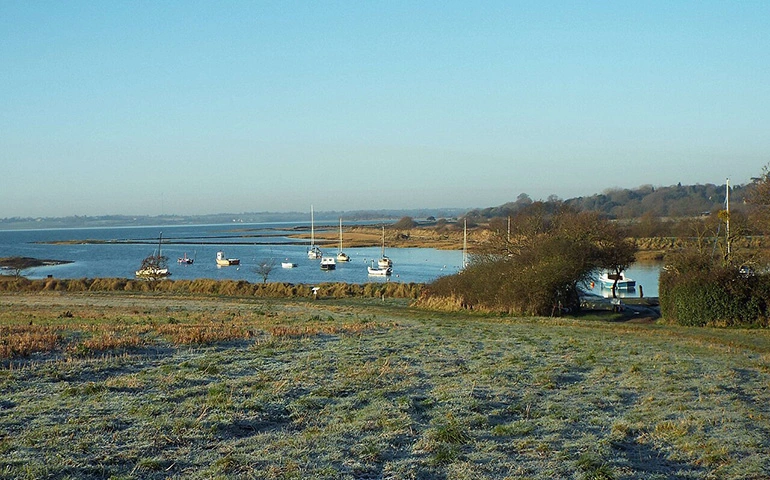
Holbrook sits a few miles south of Ipswich, at the heart of the Shotley Peninsula. This is a stretch of Suffolk that many people drive past on the way to somewhere else, yet it has its own clear identity. The peninsula is shaped by water on three sides, with the River Stour to the south and the River Orwell to the north, meeting at Harwich Harbour. Holbrook stands slightly inland from the shoreline, connected to it by creeks, lanes and footpaths that have served local people for generations.
The history of Holbrook runs deep. The village appears in the Domesday Book and grew as an agricultural settlement serving the surrounding farmland. Over time it developed a modest but steady importance as a local centre, with shops, a school and churches supporting smaller hamlets across the peninsula. Agriculture shaped daily life here for centuries. The fields around Holbrook still produce cereals and sugar beet, and the pattern of hedges and lanes reflects medieval land divisions.
The wider Shotley Peninsula has long been influenced by the rivers that enclose it. Trade moved along the Stour and Orwell, and the creeks provided sheltered spots for small vessels. Holbrook Creek remains one of the quieter corners of the Orwell. It is tidal, peaceful and edged by mudflats and saltmarsh. Walkers and sailors know it well, and it offers a different perspective on Suffolk’s coastline. There are no grand promenades or amusement arcades here. The interest lies in working boats, birdlife and the steady rhythm of the tide.
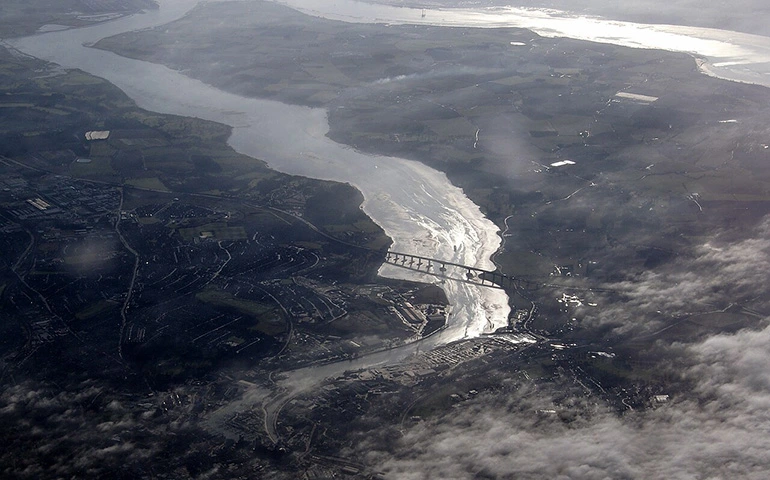
The Shotley Peninsula is not a single village but a cluster of communities, including Shotley, Chelmondiston, Erwarton and others, each with its own character. Holbrook acts as one of the practical hubs. It has local services and schools, including the well known independent school at Alton Walton. That school occupies a substantial site on the edge of the village and brings families from beyond Suffolk into daily contact with the peninsula.
Locally, the area matters because it provides both employment and identity. Farming remains significant, as does marine activity. Shotley Marina, at the tip of the peninsula, is one of the largest marinas in the east of England. It sits close to the former HMS Ganges site, which once trained thousands of Royal Navy recruits. The marina now attracts leisure sailors from across the region, supporting chandlery businesses, cafés and marine services. For residents, it represents continuity with the peninsula’s maritime past, even though the focus has shifted from naval training to leisure boating.
Pubs remain central to community life. Holbrook has long supported traditional village pubs that act as meeting points rather than tourist attractions. Across the peninsula you will also find waterside pubs where sailors and walkers share the same tables. These are not themed venues. They are practical, social spaces that reflect the peninsula’s mix of farming families, commuters and boating enthusiasts.
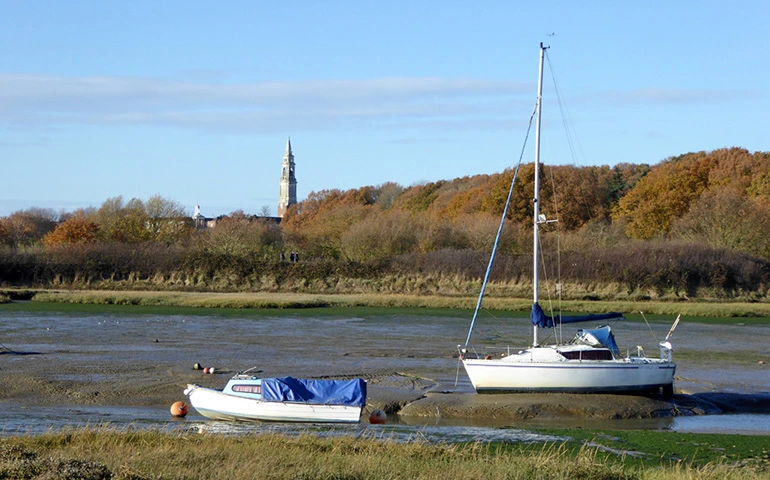
One of the lesser known aspects of the Shotley Peninsula is how connected it once was by water. Before modern roads, creeks such as Holbrook Creek provided access for goods and supplies. Small wharves and landing points existed along the shoreline. Today most of these have disappeared or survive only as subtle changes in the bank, yet their presence explains why certain paths lead to the water’s edge.
Another detail often overlooked is how rural the peninsula remains despite its proximity to Ipswich and the busy Port of Felixstowe across the water. The skyline from many points still consists of hedgerows and church towers. On clear days you can see container cranes in the distance, a reminder that this quiet corner sits beside one of the UK’s main trade gateways. That contrast is part of what makes the area distinctive. It has not become a resort, nor has it been absorbed into suburban sprawl.
Historically, the peninsula’s isolation was both a strength and a limitation. Roads in and out were limited, and even now there are only a few main routes. This shaped local attitudes and encouraged self reliance. Communities developed strong ties through churches, schools and agricultural societies. While many residents now commute, the sense of being slightly set apart from the rest of Suffolk remains.
For visitors, Holbrook and the Shotley Peninsula offer straightforward pleasures. Walking is the main draw. Public footpaths cross farmland and follow the estuary edges. The Stour and Orwell paths provide longer distance routes with clear signage. Holbrook Creek is best explored on foot at low tide or by small boat at high tide, always with attention to tidal times.
Shotley Marina is accessible by road and has parking, cafés and views across Harwich Harbour. It is a practical place to start if you want to understand the peninsula’s relationship with the sea. From there, short drives link the smaller villages. Expect narrow lanes and agricultural traffic.
Accommodation is limited compared to Suffolk’s larger coastal towns. There are holiday cottages, small bed and breakfast options and caravan parks rather than large hotels. This keeps visitor numbers moderate. Pubs and village shops provide food and essentials, though it is sensible to check opening times in advance.
Holbrook itself works well as a base. It has everyday services and sits within easy reach of Ipswich for wider facilities. At the same time, a short walk or drive takes you into open countryside or down to the creeks. The Shotley Peninsula does not compete with Suffolk’s better known seaside destinations. Its appeal lies in continuity, working landscapes and the close relationship between land and tidal water. For those prepared to explore at a slower pace, it offers a clear view of a part of Suffolk that still functions on its own terms.

© 2026 Rum Owd Dew Made by WebDAC