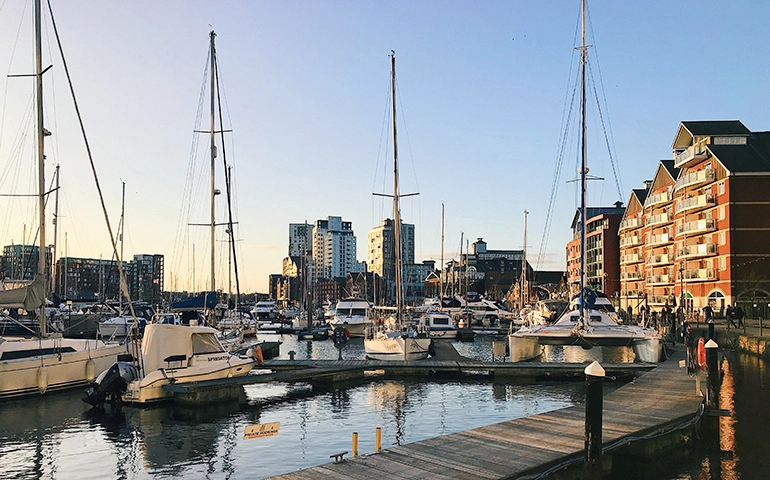
Ipswich is the county town of Suffolk and the largest settlement in the county, yet it is not officially a city. That detail often surprises people. It functions as the administrative centre for Suffolk, with county offices, courts and major services based here, but it has never been granted city status. In straightforward terms, this is where much of Suffolk’s business gets done.
The town’s scale sets it apart from the smaller coastal and market locations across the county. It has a busy centre, established residential districts and expanding business parks. For many people in Suffolk, Ipswich is where you shop, study, work or travel through. It acts as a hub linking the A12 and A14, with rail connections to London, Norwich and beyond.
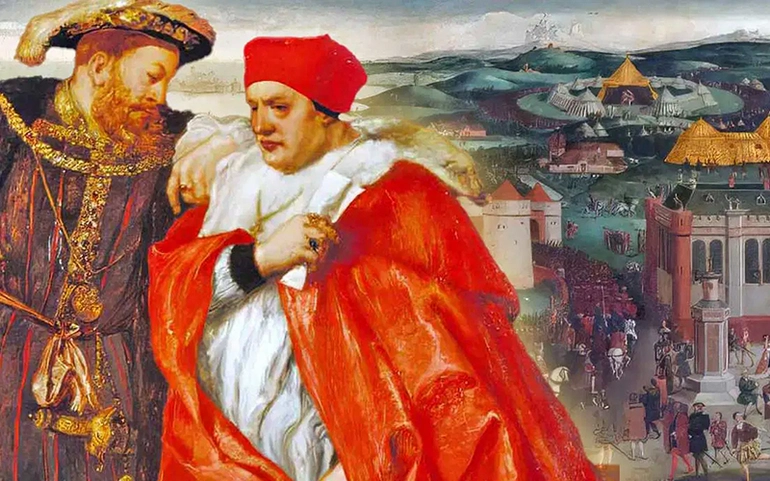
Ipswich is one of England’s oldest towns, with continuous settlement dating back to the Anglo Saxon period. By the 7th and 8th centuries it was already an important trading port. Archaeological finds show evidence of international trade, particularly pottery imported from continental Europe. During the medieval period the town prospered through wool and cloth, industries that shaped much of Suffolk’s wider economy.
The River Orwell played a central role in that growth. Ships travelled inland from the North Sea, bringing goods and influence. The docks later developed into a major commercial port, particularly during the 19th century. Although container traffic is now concentrated at Felixstowe, Ipswich retains an active dock and marina area, reflecting its long connection to maritime trade.
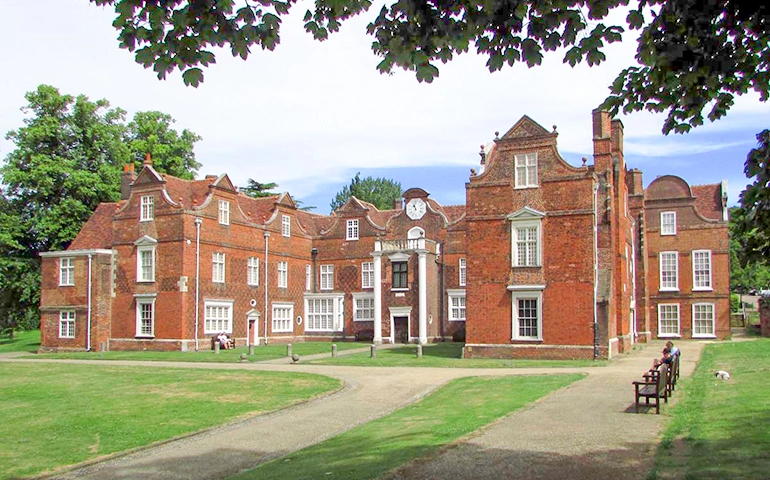
Christchurch Mansion is one of the clearest reminders of the town’s past wealth. Built in the 16th century, it sits within Christchurch Park and today houses a museum and art gallery. The surrounding parkland provides open green space close to the town centre. The name Christchurch appears across the area, including Christchurch Park and Christchurch Mansion, both well known locally.
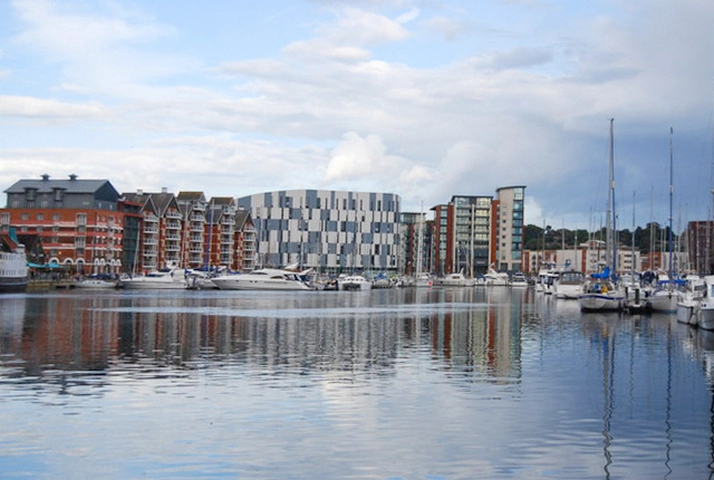
The Ipswich Waterfront has undergone major redevelopment over recent decades. Former industrial dockland has been converted into apartments, restaurants, university buildings and leisure spaces. The marina is now lined with masts rather than cranes, and the quayside is a regular meeting point for residents and visitors. It is one of the clearest examples of how the town has adapted from heavy industry to mixed commercial and residential use.
The University of Suffolk has established its main campus at the Waterfront. This has altered the age profile of the area and contributed to new businesses and facilities. Cafés, bars and independent outlets operate alongside larger chains, giving the district a different character from the traditional town centre.
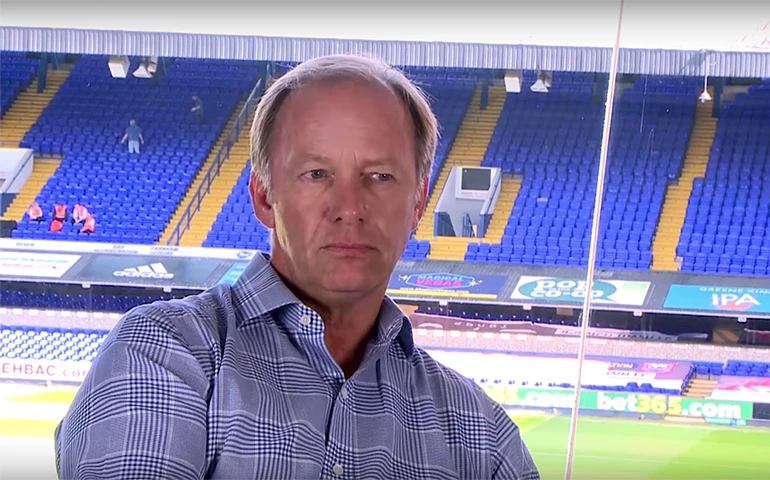
Locally, Ipswich Town Football Club remains a major point of identity. Portman Road is close to the centre and on match days the town changes pace. The club’s history, including league titles and European success, continues to shape civic pride.
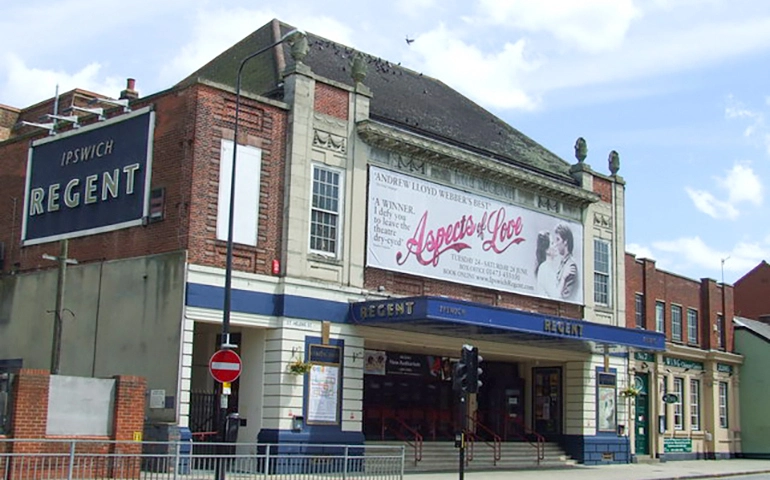
Ipswich supports several theatres and performance venues. The Regent Theatre attracts national touring productions, concerts and comedians. The New Wolsey Theatre focuses on drama and community engagement. Together they provide year round programming that draws audiences from across Suffolk and neighbouring counties.
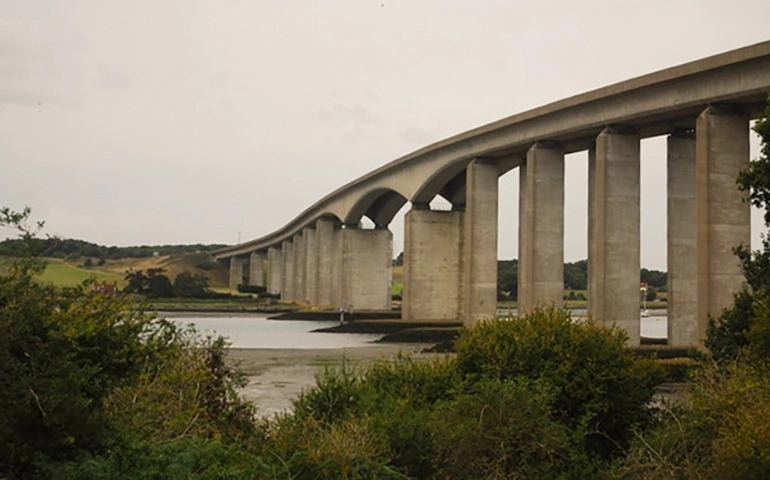
Literary connections are also present. The River Orwell shares its name with the pen name of George Orwell, born Eric Arthur Blair. Although he was born in India, he spent part of his childhood in Suffolk and attended school in the area. The river name later influenced his chosen identity. The Orwell Bridge, completed in the 1980s, now carries the A14 over the river and has become one of the most recognisable structures in the county.
One lesser known fact about Ipswich is that it offers dry slope skiing at Suffolk Ski Centre on the outskirts of town. It is not something most people associate with East Anglia, yet it provides year round skiing, snowboarding and tubing without the need for mountains or snow. It is a practical example of how local leisure provision can surprise those who assume the county is limited to coast and countryside.
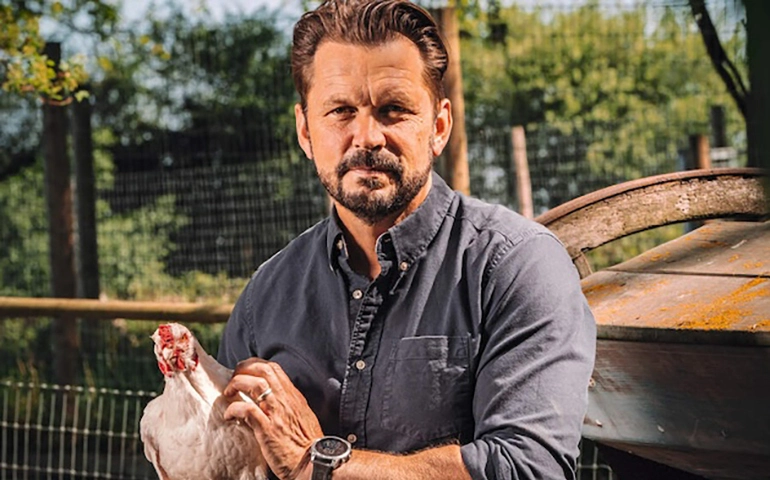
Just outside Ipswich, Jimmy’s Farm has become a popular attraction. Founded by farmer and television presenter Jimmy Doherty, it combines rare breed conservation with a working farm, restaurant and wildlife park. Its proximity to the town makes it an easy addition to a day out and links urban Ipswich with the surrounding rural landscape.
Ipswich matters because it concentrates services and opportunities that smaller towns cannot support alone. Major employers, further education, court services and transport links are based here. For many Suffolk residents, Ipswich is part of weekly life even if they do not live within its boundaries.
It also acts as a bridge between different parts of the county. Coastal communities, rural villages and nearby towns such as Woodbridge and Stowmarket all connect through Ipswich in one way or another. Its size allows for facilities that benefit the wider region, including hospitals, theatres and large scale retail.
Visitor basics are straightforward. The town centre is compact enough to explore on foot, particularly between the Cornhill area and the Waterfront. Christchurch Park offers green space within walking distance of shops and museums. Parking is available in several multi storey and surface car parks, and the railway station is a short walk from the marina. Those travelling by car should note peak traffic around the A14 and Orwell Bridge at busy times.
Ipswich may not have city status, but it functions as the capital of Suffolk in all but name. Its value lies in substance rather than presentation. Historic trade, modern redevelopment, cultural venues and practical services combine to make it the county’s working centre. For anyone seeking to understand Suffolk beyond postcards and seaside views, Ipswich is essential.

© 2026 Rum Owd Dew Made by WebDAC