
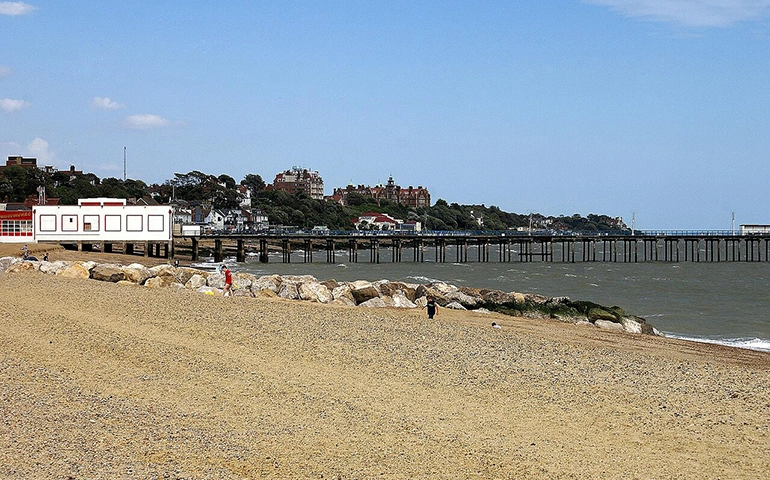
There is a particular stretch of Suffolk coastline where the view is split in two. To one side, families wander along a promenade, children carrying buckets across shingle. To the other, towering cranes move containers with quiet precision. That place is Felixstowe, or “F’lixstow” if you hear it said in proper Suffolk dialect. It is a town that refuses to be simplified.
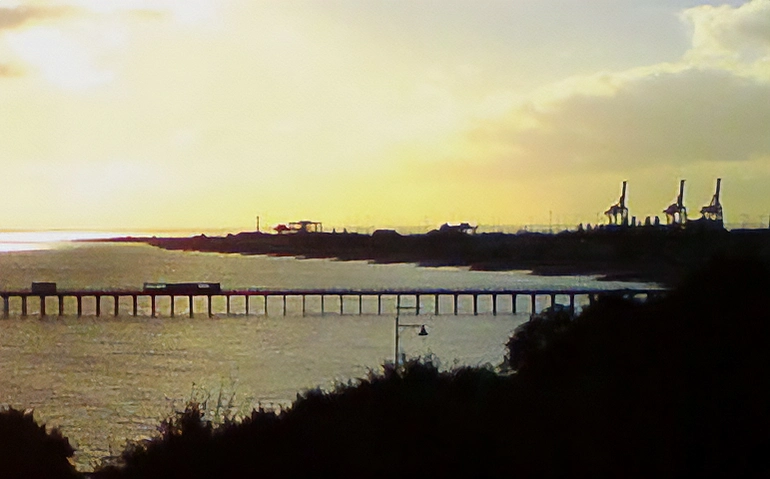
Unlike some seaside locations that rely entirely on nostalgia, Felixstowe developed layers. Its identity is shaped as much by global trade routes as by deckchairs and ice creams. That duality gives it weight. It feels grounded rather than decorative.
Before it became a recognised resort, the area that forms modern Felixstowe was a collection of smaller communities, including Walton and Old Felixstowe. The transformation began in the nineteenth century when rail connections opened the coast to visitors from inland Suffolk and beyond. Developers saw potential and began shaping the shoreline into something more deliberate.
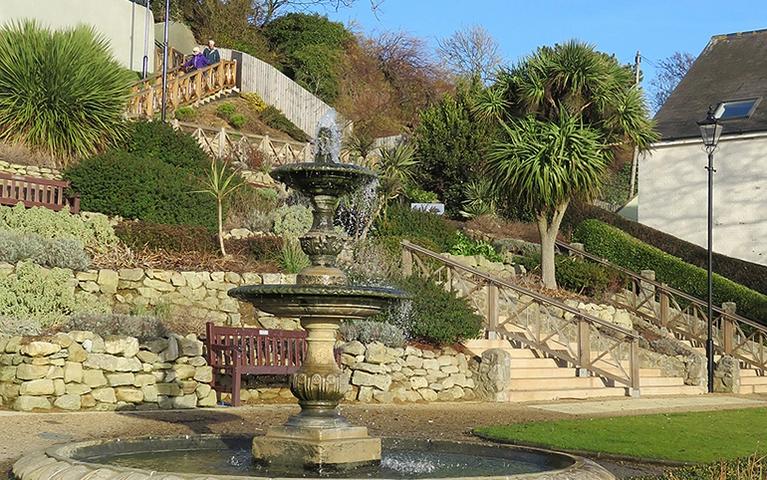
The Seafront & Gardens were laid out with intention. This was not accidental sprawl. The cliff-top walk, planting schemes and shelters reflected a Victorian understanding of leisure and health. Sea air was considered restorative, and Felixstowe marketed itself accordingly. Elegant villas and hotels followed, creating the framework of the town many still recognise.
Over time, fortunes shifted. Like many British seaside resorts, Felixstowe experienced quieter decades as holiday habits changed. What kept it steady was not tourism alone but industry. The expansion of the port in the twentieth century altered the trajectory of the town permanently.
The Port of Felixstowe is now the largest container port in the United Kingdom. Its scale is hard to ignore. Ships from across the world berth along its quays, unloading goods that move rapidly inland. For Suffolk, this is not a background detail. It is an economic anchor.
Employment, transport links and infrastructure all connect back to the docks. Rail freight lines running from Felixstowe carry containers directly towards the Midlands and beyond. That movement supports national supply chains, yet it begins here on this corner of the county.
For residents, the cranes are part of the skyline in the same way church towers are elsewhere. They symbolise work and continuity. While other resorts depend solely on seasonal visitors, Felixstowe operates year round. That steady rhythm gives it resilience.
At the southern tip lies the Landguard Peninsula, a landscape of shingle, open sky and strategic importance. Landguard Fort stands as evidence that this coastline has long been defended. The site is associated with the 1667 Dutch attack, often described as the last opposed seaborne invasion of England. That alone places Felixstowe within a broader national story.
The peninsula is also valued for wildlife. Birdwatchers regularly visit, drawn by migrating species that pause along this stretch of coast. It feels exposed and elemental. Standing there, you sense how geography shapes history. The River Orwell meets the sea nearby, creating a gateway that has always required protection.
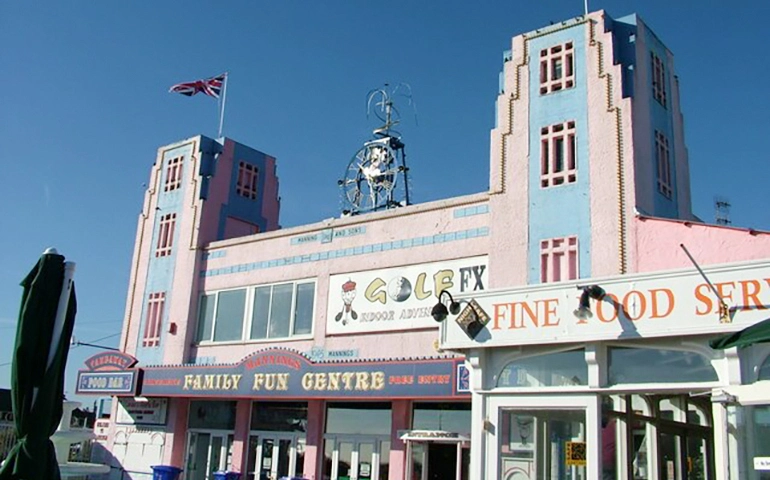
Further north, the mood changes. The Pier & Amusements deliver the familiar elements of a British seaside day out. Lights flash inside arcades, prizes hang above machines, and families drift between attractions. It is straightforward entertainment and it still draws crowds in summer.
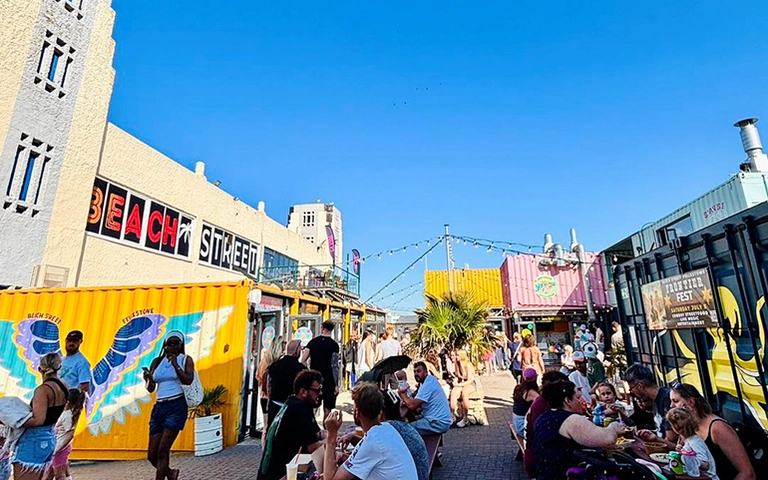
Beach Street introduces something more contemporary. Built from repurposed shipping containers, it houses independent food outlets and small businesses. The concept cleverly echoes the port’s identity without feeling forced. It brings energy to the promenade and broadens the appeal beyond traditional fare.
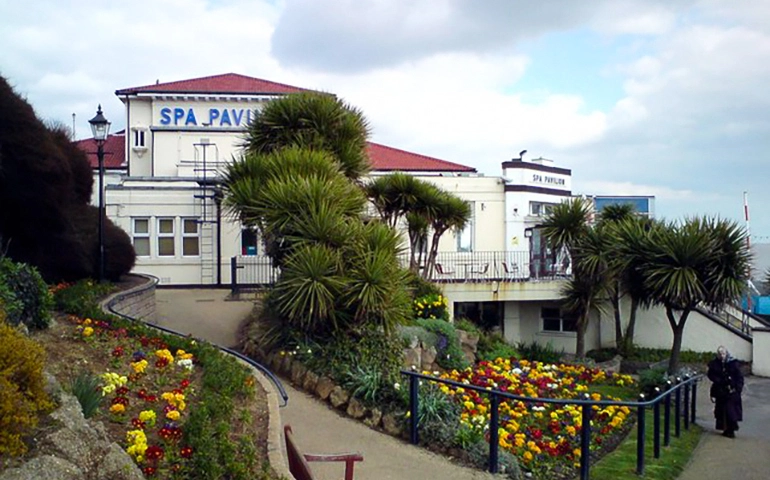
The Spa Pavilion remains one of the town’s architectural focal points. Overlooking the sea, it hosts theatre, music and community events. Its presence reinforces that Felixstowe is not only about trade and tourism but also about culture. Evenings at the Spa add a different tone to the coast, especially when the light fades and the promenade quiets.
Felixstowe is accessible by road via the A14 and by rail through Ipswich. Parking lines sections of the seafront, and the promenade provides an easy walk with consistent views. The beach is largely shingle, though sand appears at lower tide. Facilities are practical and well spaced.
Lesser known details often surprise first time visitors. Old Felixstowe, further north, has a quieter feel and a more rugged shoreline. The contrast between this and the busier central frontage shows how the town developed in stages rather than as a single planned block.
What ultimately defines F’lixstow is balance. It does not pretend to be untouched coastline, nor does it hide its industrial core. Instead, it integrates both. You can spend a morning exploring Landguard, an afternoon on the promenade, and still watch cargo ships manoeuvre against the horizon as evening approaches.
Felixstowe represents a version of Suffolk that works hard while still facing the sea. That combination gives it character. It is neither purely resort nor purely port. It is a working coast that has adapted without losing its place on the map.

© 2026 Rum Owd Dew Made by WebDAC