
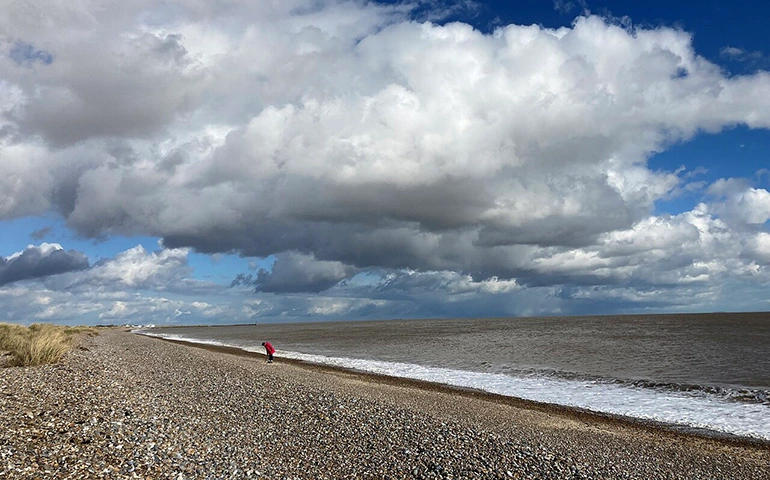
Walberswick does not try to compete with its neighbour across the river. It does not have a pier, amusement arcades or rows of shops. What it offers instead is space, wildlife, and a village identity that has held firm for centuries. Cross the River Blyth from Southwold by footbridge or rowing boat and the pace changes immediately. That contrast is part of its appeal and explains why so many people return year after year.
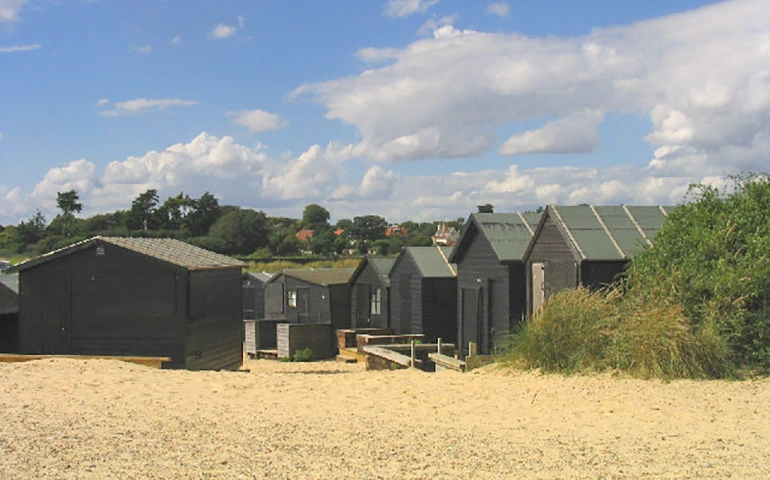
The beach at Walberswick is broad and backed by dunes rather than a promenade. It feels open and practical. Families spread out with windbreaks, dogs charge about in winter, and walkers head north towards Dunwich with uninterrupted views of sea and sky. The sand and shingle mix shifts with the seasons, and the dunes provide shelter without overdevelopment.
Behind the shoreline sits Walberswick Nature Reserve, part of the wider Suffolk Coast and Heaths Area of Outstanding Natural Beauty. The reserve includes marsh, reedbed and grazing pasture. It is known for birdlife, particularly in autumn and winter when waders and wildfowl gather on the estuary. Footpaths and boardwalks make access straightforward, though sections can be muddy after rain. This protected landscape is one of the main reasons the village has avoided large scale expansion. Development is tightly controlled, and the surrounding land remains largely agricultural or conserved.
Walberswick was once more commercially active than its quiet streets suggest. In medieval times it functioned as a small port and had links to the wool trade. Storm damage and coastal change reduced its importance over time, and the harbour silted. Like much of this stretch of Suffolk, erosion and shifting river channels have shaped its fortunes.
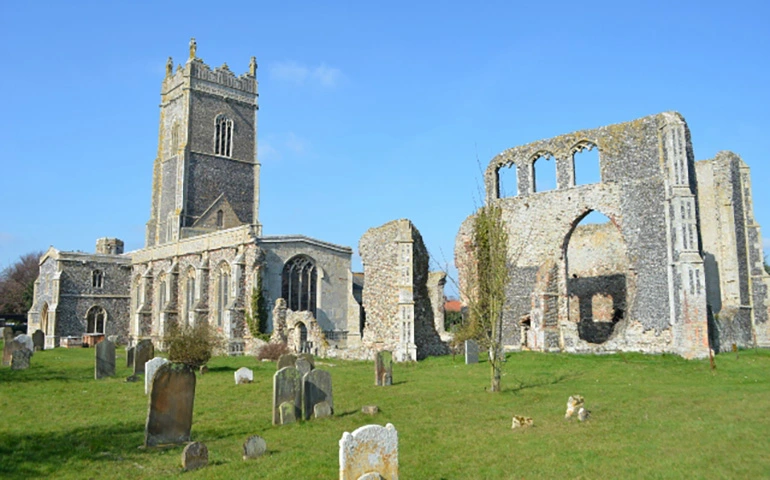
The remains of St Andrews Church stand as a reminder of that earlier period. The church was partly demolished in the seventeenth century after storm damage and declining population made it impractical to maintain at full scale. Today the ruined tower and walls sit beside the later, smaller church building. It is one of the village’s most photographed landmarks and an unusually clear example of how coastal communities have adapted rather than abandoned their sites entirely.
Fishing and farming sustained the village through quieter centuries. Boatbuilding and smuggling have both been associated with the area, though documentary evidence is stronger for the former. By the late nineteenth and early twentieth centuries, Walberswick began attracting artists and writers drawn by the light and the relative isolation. That creative connection still forms part of its reputation, though it remains a working village first.
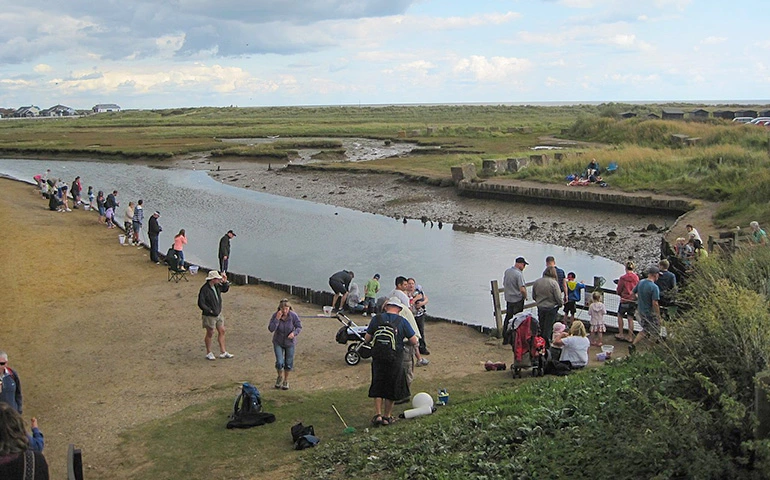
For many people, Walberswick means one thing in summer: the British Open Crabbing Championship. Held annually on the quay along the River Blyth, the event draws competitors of all ages armed with baited lines and buckets. The goal is simple. Catch as many crabs as possible within the time limit. The atmosphere is informal and competitive in equal measure, and proceeds support local causes.
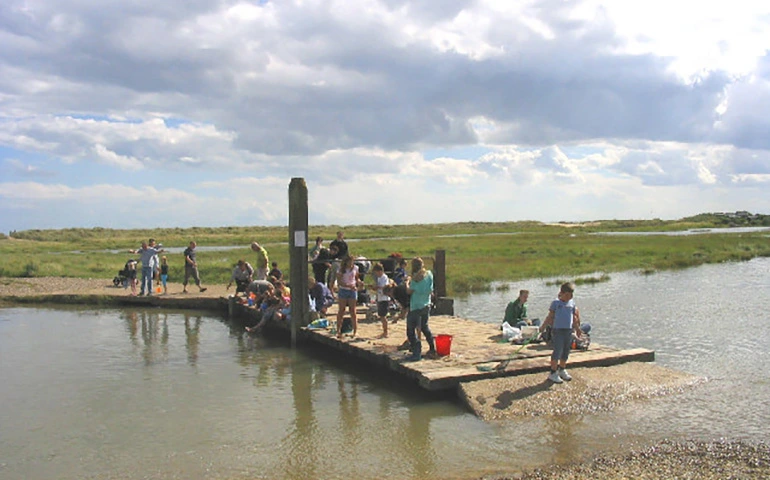
It would be easy to dismiss the championship as a novelty, yet it says a lot about the place. Crabbing has long been part of everyday life on the estuary. Turning that into a national competition reflects both humour and pride. The event regularly attracts thousands of visitors, briefly transforming the village into one of the busiest spots on the Suffolk coast.
Outside that single day, life is steadier. There is a village shop, a handful of pubs, and a green that hosts local events. The ferry to Southwold runs in season, rowed across the Blyth in a few minutes, maintaining a simple link that predates modern bridges. This connection reinforces Walberswick’s significance locally. It complements Southwold without trying to mirror it, offering an alternative base for those who prefer fewer crowds.
Parking is concentrated near the beach and can fill quickly on warm days. Arriving early helps. Facilities are limited compared to larger resorts, which is part of the point. Visitors come prepared with food, water and windproof layers. The dunes provide natural shelter but the North Sea breeze can be strong even in summer.
One lesser known detail is how extensive the marsh network is behind the village. Walk beyond the obvious paths and the scale of the reedbeds becomes clear. These wetlands form an important flood buffer and habitat corridor linking inland Suffolk to the coast. The management of grazing and water levels is ongoing and largely invisible to casual visitors.
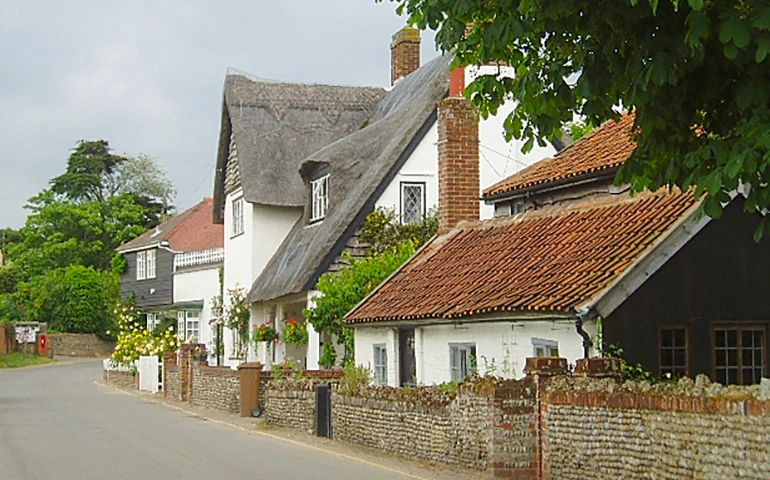
Another detail often overlooked is the architectural mix. While there are attractive period cottages with pantiled roofs and pastel paintwork, there are also more modern houses built carefully within planning constraints. The result is not a preserved museum village but a living settlement where homes evolve while respecting scale and materials.
Walberswick works because it has limits. The beaches and dunes are left largely natural. The nature reserve is protected. The ruins of St Andrews Church remain as they are rather than reconstructed for effect. The crabbing championship is organised but not commercialised beyond recognition. For Suffolk, it represents a model of how tourism and community can coexist without losing character.
People visit for different reasons. Some come for birdwatching, others for long beach walks, others for that one competitive afternoon with a crabbing line. What they find is consistency. Walberswick does not promise spectacle. It offers coastline, history, and a strong sense of place that has endured through storm, erosion and changing fashion. That quiet resilience is what keeps it relevant within Suffolk today.

© 2026 Rum Owd Dew Made by WebDAC