
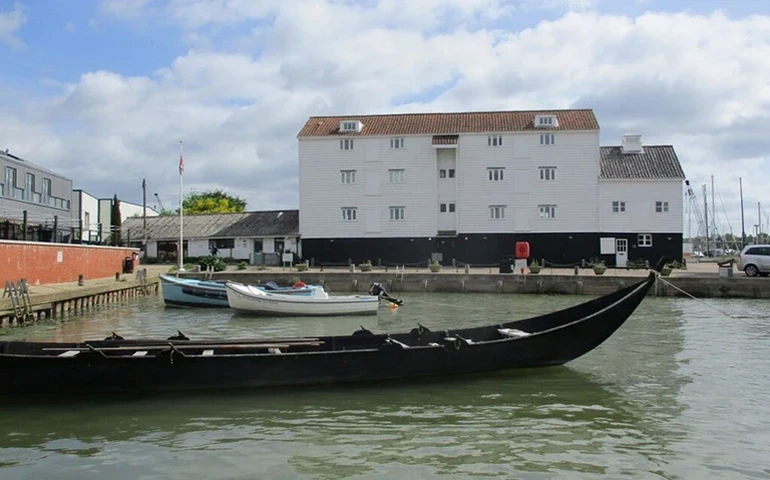
Woodbridge sits on the banks of the River Deben, a town that feels steady and self assured without ever needing to shout about itself. It is one of those Suffolk places where the water, the sky and the low rooftops seem to settle into each other. My connection is personal. My father was born here and my grandparents lived here, so this is not a town I pass through as a visitor. It is stitched into family stories, into Sunday walks, into memories of looking out across the tide and thinking that this stretch of river somehow mattered.
There is an ease to Woodbridge. Boats lean into their moorings. The Deben moves with the tide rather than against it. The town centre keeps its scale. You can walk it without a plan and still feel you have seen something of value. That sense of proportion is part of its character and part of the reason it has remained significant locally for generations.
Woodbridge has medieval roots, with evidence of settlement long before that. Its position on the Deben made it important as a trading point, linking inland Suffolk to the North Sea. The river was a working route. Goods came and went. Timber, grain and other cargo shaped the town’s economy and its layout. Even today you can read that history in the street plan and in the buildings that line the Thoroughfare.
The most famous chapter of local history lies just outside town at Sutton Hoo. The Anglo Saxon burial site discovered in 1939 changed the understanding of early English history. The ship burial and its treasures placed this part of Suffolk firmly on the national map. Woodbridge became the nearest town to a story that reached far beyond the Deben valley. Sutton Hoo is not a footnote here. It is part of the identity of the place.
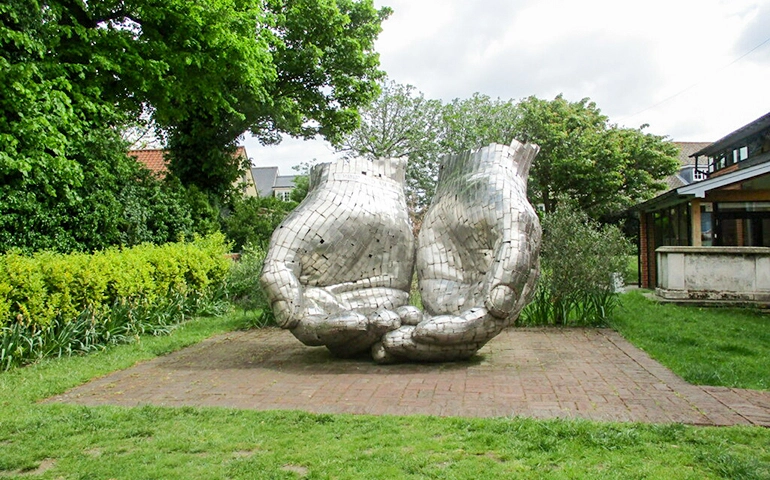
Within the town itself, St Mary’s Church stands as a marker of continuity. Inside, you will find what locals often refer to as “The Hands”. They are simple, easily missed if you are rushing, yet once seen they tend to stay with you. Details like that give Woodbridge depth. It rewards those who slow down and look properly.
The Woodbridge Tide Mill is one of the town’s defining features. Sitting beside the Deben, it is one of the few surviving tide mills in the country. It uses the natural rise and fall of the river to power its machinery. That alone makes it worth understanding. This was practical engineering long before modern sustainability became fashionable. The mill speaks to a time when communities worked with the landscape rather than trying to overpower it.
The riverfront remains one of the best places to appreciate the town. Boats, mudflats and big Suffolk skies create a view that changes hour by hour. At low tide the Deben exposes its wide banks. At high tide it fills out and reflects the buildings and trees. For visitors, it is the obvious place to start. For locals, it is simply part of daily life.
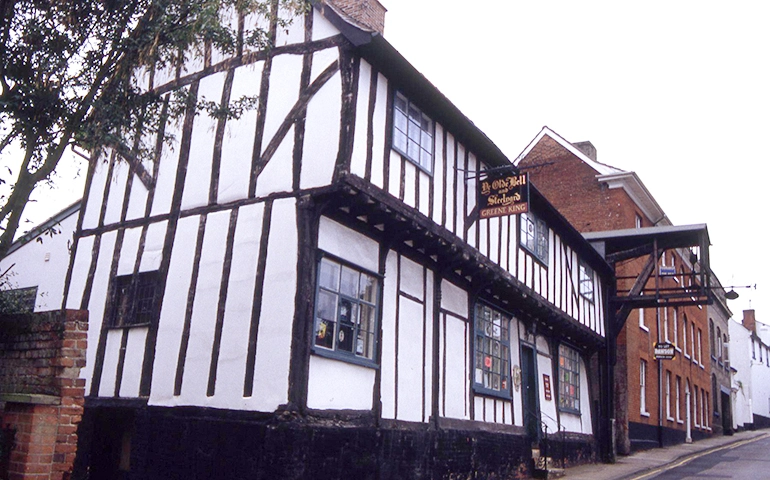
Woodbridge has its share of old pubs, the sort that feel anchored rather than themed. Timber beams, uneven floors and low ceilings are common features. These places have served generations of residents and river workers. They are social spaces that carry memory as much as they carry conversation. You can sense that continuity if you spend enough time in them.
Lesser known facts often sit in plain sight. The town has a strong cultural undercurrent, with independent shops, small galleries and regular local events that rarely make national headlines. It has been home to writers, artists and musicians who value its scale and its proximity to landscape. The balance between activity and quiet is part of the appeal. It is not trying to compete with larger centres. It simply holds its ground.
There is also a subtle confidence in the architecture. Georgian and medieval buildings stand alongside later additions without creating visual chaos. Woodbridge has managed growth without losing its core. That is not accidental. It reflects a community that cares about how the place looks and feels.
For visitors, Woodbridge is accessible and manageable. It sits a short distance from Ipswich and is well connected by road and rail. The town centre can be explored on foot. Parking is available, and the riverfront is a natural focal point. Sutton Hoo is only a short drive away, making it easy to combine both in a single trip.
Walking routes along the Deben offer straightforward access to open countryside. Cafes and independent shops line the main streets. The Tide Mill is open to the public at set times, and St Mary’s Church welcomes those who wish to look around. None of it feels forced. You can plan your day or allow it to unfold.
For me, Woodbridge is more than a checklist of attractions. It is the place where my father’s story began and where my grandparents made their home. That personal link changes how I see it. The river is not only scenic. The church is not only historic. The pubs are not only old. They are part of a lived experience that stretches back through family and further still through centuries of Suffolk life.
Woodbridge does not need reinvention. It stands as a reminder that significance does not always arrive with scale. Sometimes it comes from continuity, from a river that still follows the tide, from a church detail like “The Hands” that prompts curiosity, from a tide mill that still turns. In Suffolk terms, that is more than enough.

© 2026 Rum Owd Dew Made by WebDAC