
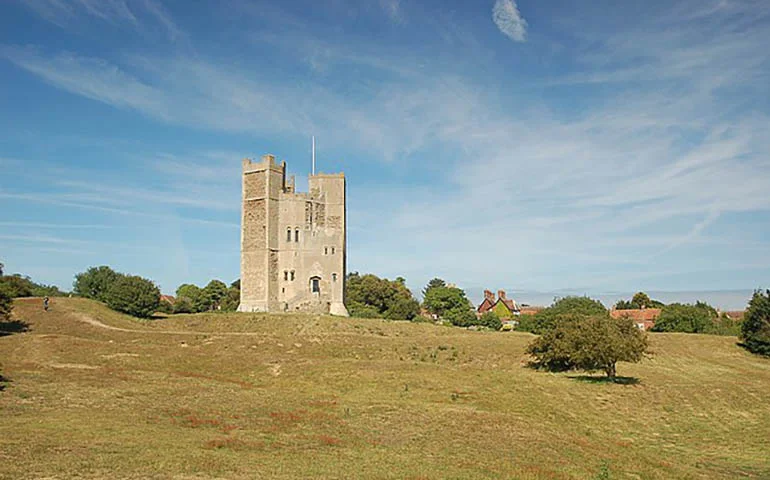
Orford does not trade on gimmicks. It is a small Suffolk village with a castle at its centre, a quay facing the River Ore, and a long record of adapting to change without losing its identity. You can walk from one end to the other in minutes, yet the place carries nearly a thousand years of documented history. It feels practical and grounded rather than polished.
The most recognisable feature is Orford Castle. Built in the late twelfth century during the reign of Henry II, it was designed as a statement of royal authority in a region where powerful barons had previously held influence. The unusual polygonal keep still stands almost intact, which is rare for a castle of that age. From the roof, there are wide views across the marshes and towards the coast, making it clear why control of this point mattered.
Orford was once a significant medieval port. In 1173 it was granted borough status, and for centuries it returned Members of Parliament despite its small population. Trade passed through here, and fishing supported the community. Over time the River Ore shifted and silted, reducing Orford’s importance as a harbour, but the shape of the settlement still reflects its earlier status.
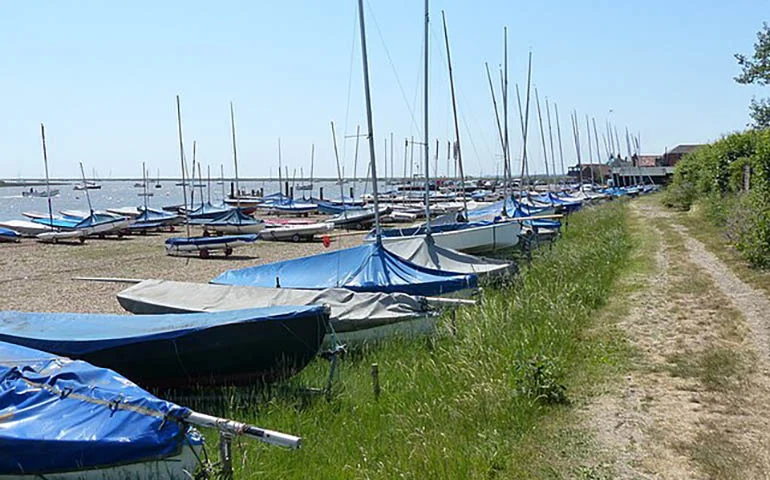
The quay remains the heart of day to day activity. Small boats are moored along the river, and fishermen still land their catch locally. It is one of the best places in Suffolk to buy fresh seafood directly from the source. The river itself is tidal and changes character through the day. At low tide the mudflats dominate. At high tide the water reaches close to the quay wall and the scene feels busier.
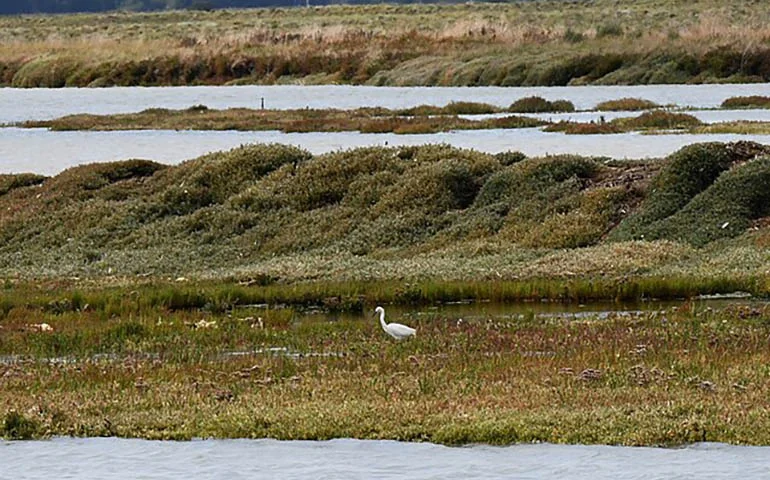
From the quay you can take a boat trip to Havergate Island. The island is owned and managed by the Royal Society for the Protection of Birds and is normally closed to the public, but limited guided visits are available. It is known for avocets and other wading birds, and it plays a role in the wider Alde and Ore estuary ecosystem. The surrounding marshes are part of what makes this stretch of Suffolk important for wildlife.
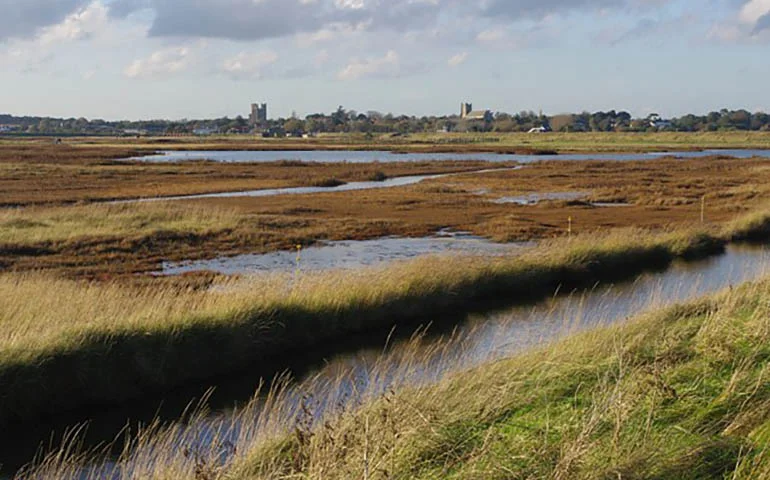
Across the river lies Orford Ness National Nature Reserve. Now managed by the National Trust, it is one of the most unusual landscapes in England. The shingle spit stretches for miles and has a history that goes beyond wildlife. During the twentieth century it was used for military research and testing. Remains of former radar installations and experimental structures still stand, giving insight into Britain’s defence work during both World Wars and the Cold War period.
Access to Orford Ness is controlled and seasonal, which helps protect the fragile environment. Visitors travel by boat from the quay and explore on foot or by cycle. The mix of natural habitat and preserved military buildings makes it distinct from other reserves in Suffolk. It is not a theme park experience. It requires time and an interest in the details.
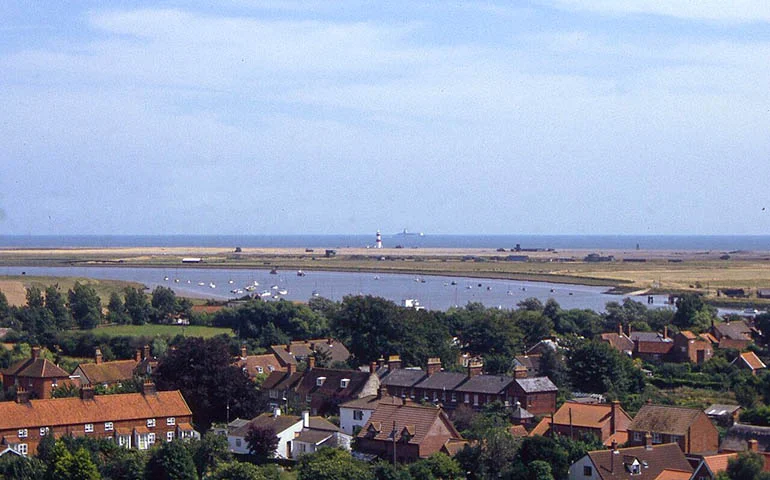
For a village of its size, Orford has long held influence beyond its population. The castle anchors its medieval identity, the Ness reflects national security history, and the river supports both fishing and conservation. Locally, it serves as a gateway to the wider estuary. Walkers, birdwatchers and sailors all pass through here.
There are also smaller details that often go unnoticed. The parish church of St Bartholomew contains memorials that trace generations of local families. The village once had a reputation for smuggling, helped by the maze of creeks and shifting channels. Even the layout of the streets hints at former wealth, with substantial houses set back from the road.
Visitor basics are straightforward. Parking is available near the quay and by the castle, though it can be busy in summer. There are a handful of pubs, cafés and independent shops rather than large chains. Most people arrive by car, as public transport options are limited. The village is compact, so everything is within walking distance. Comfortable footwear is sensible if you plan to explore the Ness or the river paths.
Orford does not attempt to compete with larger seaside towns. It offers a mix of castle history, estuary wildlife and working river life in one place. That combination is what keeps it relevant within Suffolk. It is a village that shows how coastal communities evolve while holding onto the parts that matter.

© 2026 Rum Owd Dew Made by WebDAC