
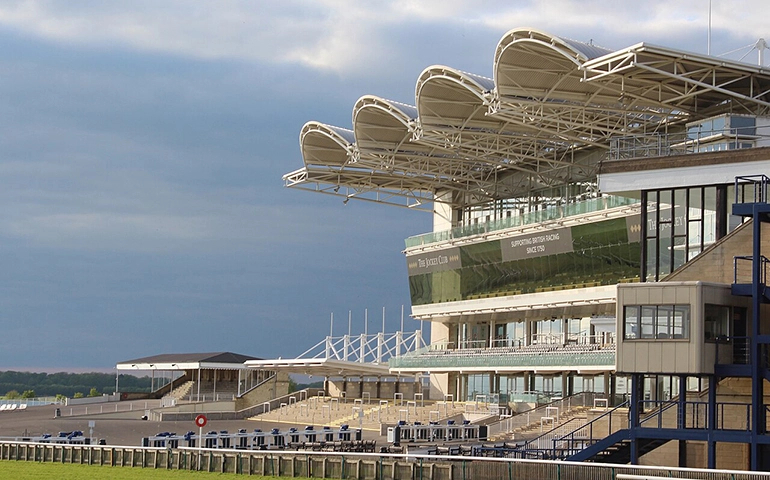
Newmarket does not rely on charm to make its case. It relies on hooves. The rhythm of training yards at dawn, the quiet concentration of stable staff, the measured authority of race meetings. This is a working town first and a visitor destination second, and that distinction matters. Its identity is tied so tightly to the thoroughbred that separating the place from the animal is almost impossible.
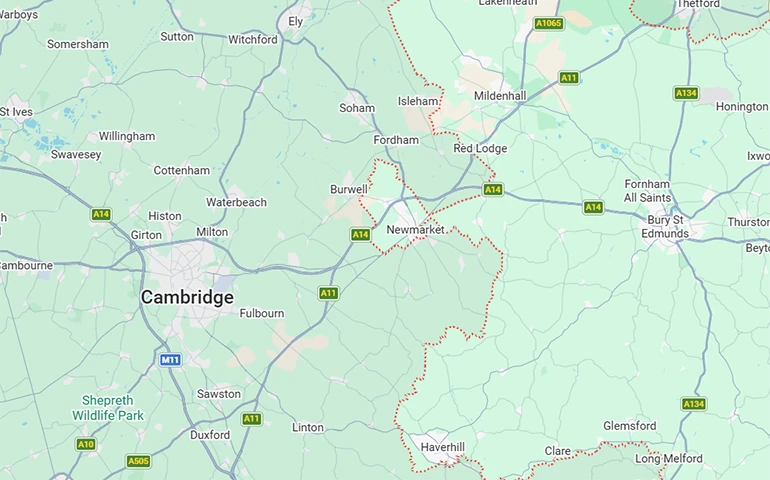
Technically, Newmarket is in Suffolk. Look at a map and that can seem wrong. The county border wraps around the town in a way that makes it appear almost absorbed by Cambridgeshire. Cambridge sits only a short drive to the west, and much of the surrounding landscape feels aligned with that direction. The explanation lies in historic boundary arrangements that long pre-date modern administrative convenience. County lines were drawn and redrawn over centuries, and Newmarket remained within Suffolk despite the geography suggesting otherwise. The result is a town that often feels like it stands on a threshold.
The modern reputation of Newmarket began in the seventeenth century when royal attention turned towards its open heathland. James I is often credited with establishing its early racing connections, but it was Charles II who embedded the town firmly into the national sporting consciousness. He frequented Newmarket, raced his own horses, and helped formalise what would become an enduring institution. The flat expanses of the heath proved ideal for organised competition, and the sport evolved with structure and ceremony.
From those beginnings emerged what is now regarded as the headquarters of British flat racing. The Jockey Club has its roots here. The National Horseracing Museum preserves the story, from aristocratic patronage to modern training science. What started as royal diversion became a professional industry that shaped livelihoods, architecture, and daily life.
Horseracing in Newmarket is not a seasonal novelty. It is constant. There are two principal racecourses, known as the Rowley Mile and the July Course, each hosting major fixtures in the flat racing calendar. The phrase National Horseracing is often associated with jump racing and Cheltenham, yet when it comes to flat racing, Newmarket occupies a similar symbolic position. It is where bloodlines are studied, reputations are made, and records are chased.
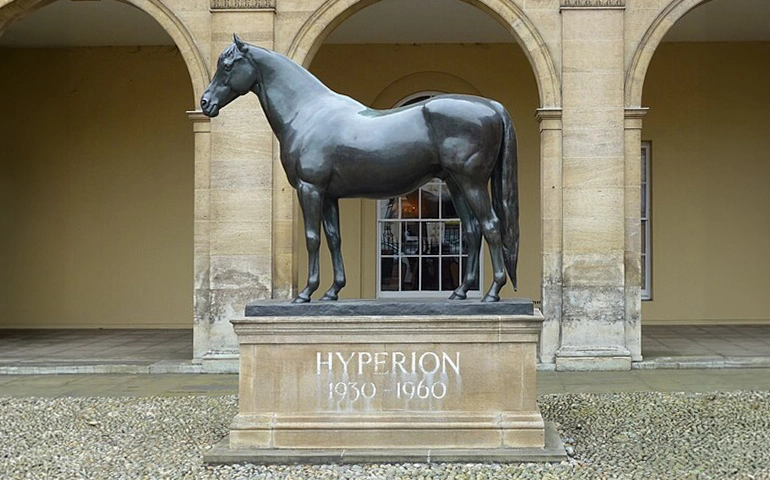
The statue of Hyperion stands as a reminder that the town’s fame is not abstract. Hyperion, one of the most influential thoroughbreds of the twentieth century, became a dominant sire whose legacy shaped breeding worldwide. The sculpture is both tribute and declaration. It signals that breeding, as much as racing, defines the town’s importance.
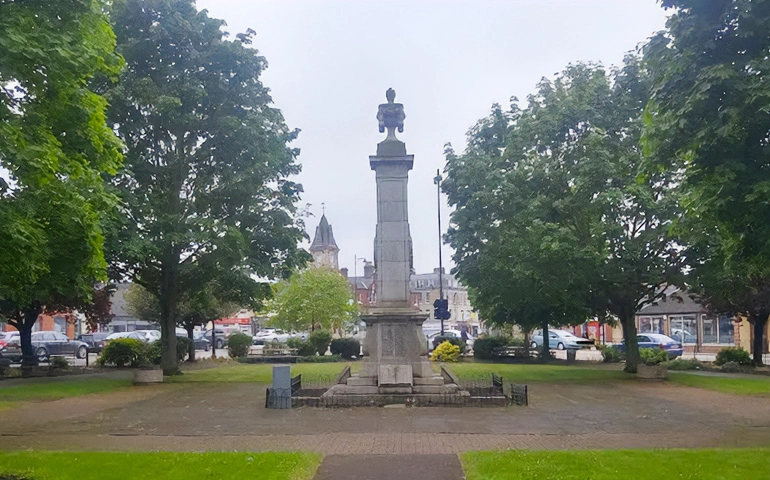
Green space provides balance to the intensity of the racing calendar. King Edward VII Memorial Gardens offer a calm setting near the town centre, with lawns and seating that soften the surrounding streets. The War Memorial Gardens serve a similar reflective purpose, honouring those lost in conflict while providing a place to pause. These spaces are modest, yet they reveal another side of Newmarket. It is not all grandstands and gallops. It is also a community with its own quieter rhythms.
Lesser known facts often surface when looking beyond headline race days. Thousands of horses are in training at any one time across the town’s extensive network of yards. Early morning exercise on the heath is a spectacle in itself, though it remains a working routine rather than a performance. The scale of land dedicated to training is significant, and access to certain gallops is tightly managed to protect both horses and riders. This controlled environment has helped maintain standards that keep Newmarket at the forefront of the sport.
Within Suffolk, Newmarket holds a distinctive status. It generates employment not only in racing but in veterinary services, transport, hospitality, and breeding. International investment flows through its studs and sales rings. For a county often associated with agriculture and coastline, Newmarket adds a different economic and cultural dimension.
Its influence extends far beyond county boundaries. Owners, trainers, and jockeys from across the world base themselves here. Major race meetings draw visitors nationally and internationally. When people speak of British flat racing, they are frequently speaking about Newmarket, whether they realise it or not.
There is also a sense of tradition being maintained with discipline. The industry has adapted to modern expectations around welfare and regulation, yet it remains anchored in practices that date back centuries. That continuity gives the town a certain gravity. It is not chasing relevance. It already has it.
For visitors, timing shapes the experience. Race days bring energy and larger crowds. Outside of meetings, the town feels more measured. The National Horseracing Museum provides structured insight and is a practical starting point for understanding what surrounds you. Walking routes across the heath allow glimpses of training activity, though respect for working spaces is essential.
Accommodation and dining options are geared towards racegoers and industry professionals, so booking ahead during major fixtures is sensible. Transport links are straightforward by road, particularly via the A14, which connects towards Cambridge and Bury St Edmunds. Rail connections typically involve changing at Cambridge.
Newmarket rewards attention to detail. It is easy to reduce it to a racecourse and a reputation. Spend longer and a layered picture emerges. County boundaries that confuse the map, royal patronage that shaped national sport, statues that mark equine achievement, and gardens that anchor community life. It remains firmly Suffolk, even if the border suggests otherwise. And at its centre, always, the horse.

© 2026 Rum Owd Dew Made by WebDAC