Lavenham does not need much introduction once you step into its market place. The scale of the timber framed buildings tells you immediately that this was never an ordinary Suffolk village. It was built on money, and a lot of it. Not modern industry or seaside trade, but medieval wool. That wealth still shapes every street.
Unlike many places that grew steadily over centuries, Lavenham experienced a dramatic rise and then a long pause. In the 15th and early 16th centuries it was one of the richest settlements in England, built on the production and export of high quality broadcloth. The local wool trade connected this small Suffolk community to European markets. Merchants invested heavily in property, churches and civic buildings. When the cloth trade declined in the 16th century, growth stalled. That downturn preserved the village rather than destroying it. There was no later wave of redevelopment to replace what had been built.
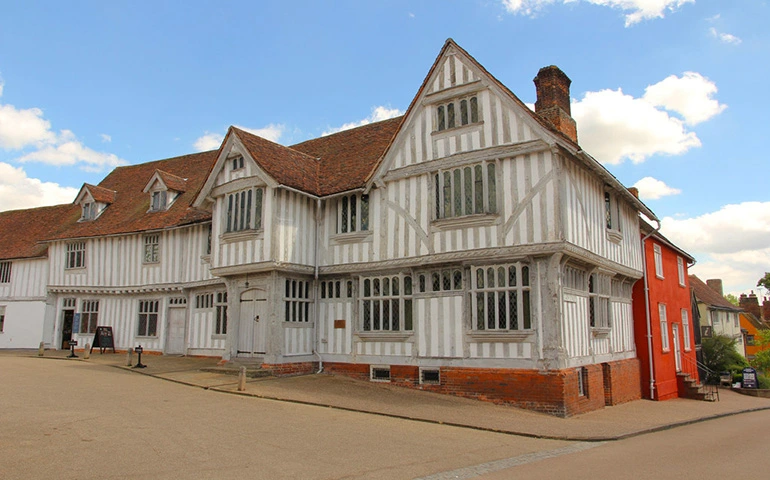
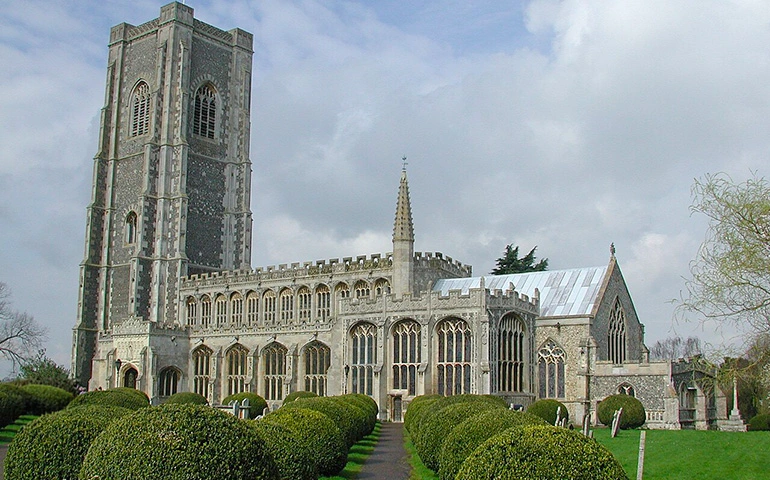
The scale of St Peter and St Paul’s Church, often called a “wool church,” reflects the confidence of that period. Its tower dominates the skyline, funded by merchants who wanted to display both faith and status. Lavenham Guildhall, which still stands beside the market place, was constructed in the early 16th century and served as a meeting place for the Guild of Corpus Christi. It represents the organised structure of the wool industry and the influence of the merchant class. Today it is open to the public and offers insight into domestic life, trade and the social structure that once supported the town’s prosperity.
As trade patterns shifted and other regions outpaced Suffolk’s cloth industry, Lavenham’s economic importance declined. That change mattered locally because it redirected growth elsewhere. Towns that adapted industrially expanded. Lavenham did not. The result is a settlement that retains a rare concentration of late medieval and Tudor buildings. More than 300 structures are listed. This level of preservation is not accidental. It is the outcome of economic stagnation that later became an asset.
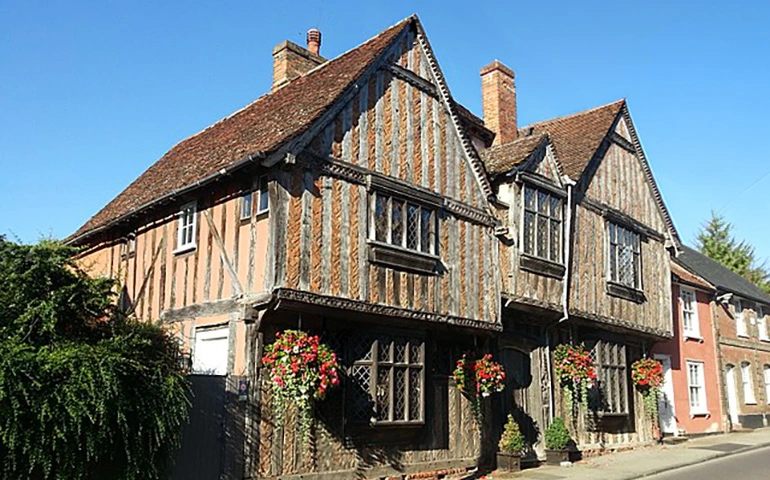
Several individual properties have become landmarks in their own right. De Vere House, a striking timber framed building near the centre, is widely photographed and is associated with the de Vere family, Earls of Oxford. It gained modern recognition when it was used as part of the setting for Godric’s Hollow in Harry Potter and the Deathly Hallows Part 1. That filming introduced Lavenham to a new audience, though the building’s architectural value stands on its own.
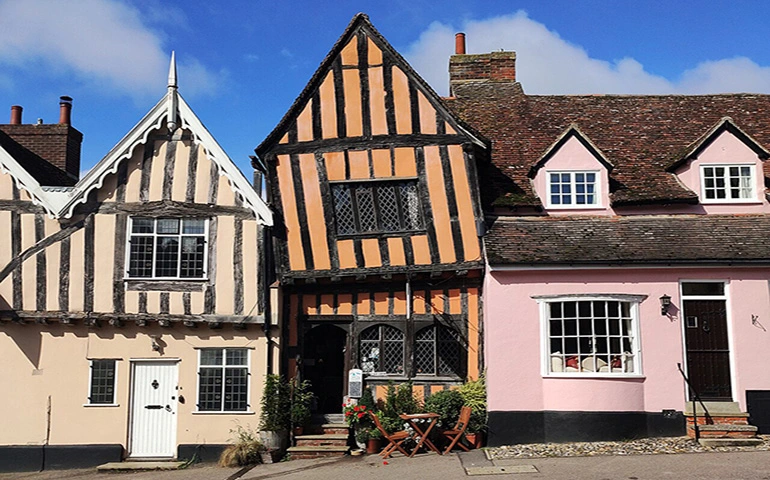
The Crooked House on High Street lives up to its name. Its warped beams and leaning frontage are the product of centuries of movement in green oak frames and uneven foundations. It is not unique in Lavenham, but it is one of the most extreme examples and shows how medieval construction methods respond over time.
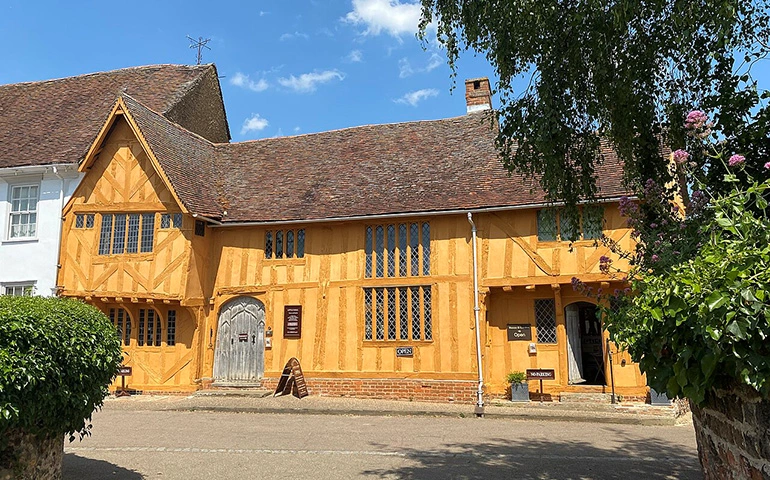
Little Hall Museum offers a more intimate perspective. Built in the late 14th century, it was once a cloth merchant’s house and later fell into disrepair before being restored in the 20th century. It now operates as a museum, displaying objects that reflect domestic life across different periods. The building itself is part of the exhibit. Its layout and timber structure help explain how families lived and worked during the height of the wool trade.
Lavenham is significant locally because it demonstrates the scale of Suffolk’s historic involvement in the wool industry. The county’s prosperity during the medieval period was built largely on sheep and cloth. Many towns share that heritage, but few retain such a complete built environment to show it. For Suffolk residents, Lavenham is evidence of how international trade once flowed through rural East Anglia.
The village also plays a practical role in the county’s tourism economy. Its preserved streetscape attracts visitors year round, supporting independent shops, galleries and hospitality businesses. That matters in a rural county where sustaining local trade can be challenging. The success of Lavenham as a destination reinforces the value of heritage conservation across Suffolk.
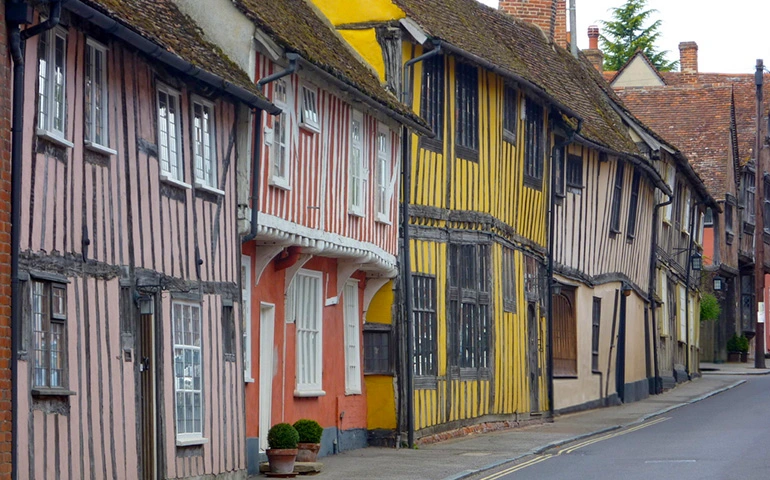
For visitors, the layout is straightforward. Most of the key buildings cluster around the market place and along High Street and Water Street. Lavenham Guildhall and Little Hall Museum are open seasonally, so it is worth checking times before travelling. The church is usually accessible during daylight hours. De Vere House is privately owned, so it can be viewed from the street only.
Parking is available on the edge of the village, with a short walk into the centre. The streets are narrow and uneven in places, reflecting their medieval origins. Sensible footwear makes a difference. Independent cafés, tearooms and small shops line the main routes, and there are several pubs offering food.
A lesser known fact is that Lavenham was once larger and more influential than nearby towns that later overtook it. Its story is not one of continuous growth but of rise, decline and preservation. That sequence gives it a different character from coastal resorts or expanding market towns. It feels contained, not because it is staged, but because it stopped developing at a particular moment in history.
Lavenham works best when approached with that understanding. It is not a theme park and it is not a living museum in costume. It is a village shaped by medieval wealth, protected by later poverty, and maintained through careful stewardship. For anyone interested in Suffolk’s wool history and the physical evidence it left behind, there are few clearer examples.

© 2026 Rum Owd Dew Made by WebDAC