Great Finborough is a small village a few miles north of Stowmarket, set within open farmland and typical Mid Suffolk countryside. It is not large and it does not try to be anything other than what it is. What it offers is continuity. Fields, hedgerows, a parish church, a village green and a steady rhythm of local events that still matter to the people who live there.
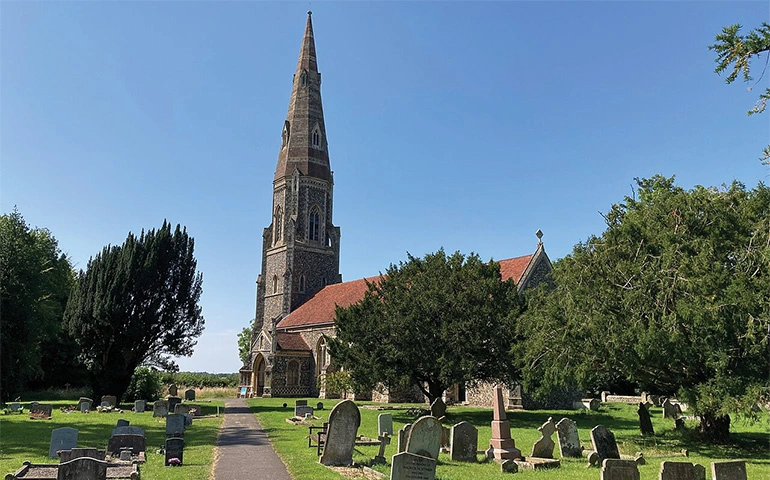
At the centre of the village stands St Andrew’s Church, a clear marker of Great Finborough’s long history. The church dates back to the medieval period and, like many Suffolk churches, reflects centuries of rebuilding and repair rather than one single phase of construction. Its tower and spire are visible from surrounding fields, acting as a point of reference across the landscape.
There is a local legend attached to that spire. It is said that the village squire had it added so his wife could find her way home across the countryside. Whether fact or folklore, the story has endured and is often repeated as part of the village’s identity. It reflects something important about rural Suffolk. Landmarks are practical. They guide people home.
The wider parish has agricultural roots that go back centuries. Farming shaped settlement patterns, employment and daily life. Estate influence was strong here, and Great Finborough Hall and its grounds remain a notable presence. The village developed around these structures, with cottages and farm buildings forming the core of the community.
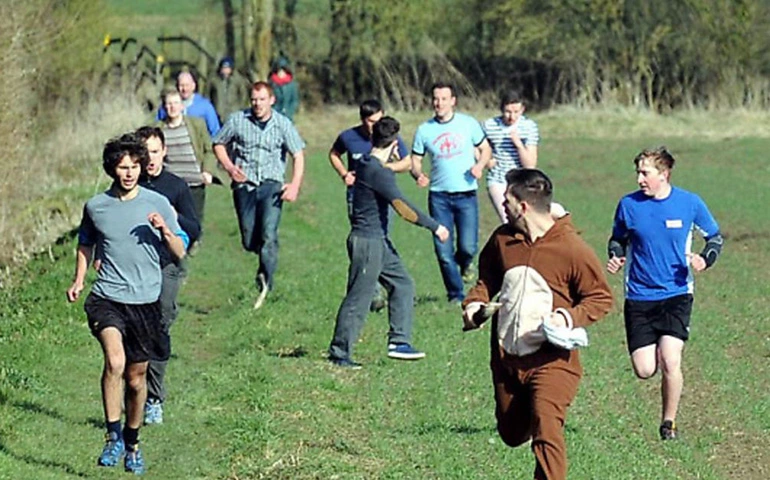
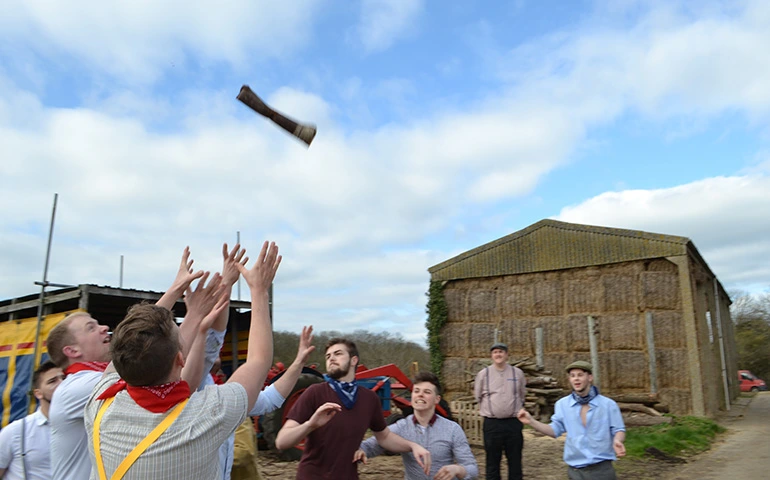
If you want to understand why Great Finborough matters locally, look at Easter Monday. That is when The Bog Race takes place. It is exactly what it sounds like. Competitors run through mud and water, often in fancy dress, cheered on by residents and visitors who gather for the spectacle. It is messy, loud and unapologetically rural.
The Bog Race is more than novelty. It raises money for local causes and draws people back to the village year after year. In a county where many small communities are fighting to keep events alive, Great Finborough has held on to one that feels rooted rather than manufactured. It reinforces connections between generations and gives the village a clear point in the calendar.
For visitors, Great Finborough works best as part of a short walk rather than a full day destination. The route from Onehouse to Great Finborough is a popular local choice. It crosses open countryside and quiet lanes, offering wide views and a steady, manageable distance. It is typical Mid Suffolk walking. No drama, no crowds, simply farmland and space.
Lesser known details tend to emerge when you take that slower pace. The scale of the parish, the relationship between hall, church and cottages, and the way modern housing sits alongside older buildings all become more obvious on foot. The village green, the positioning of St Andrew’s Church and the approach roads each tell part of the story of how the settlement evolved.
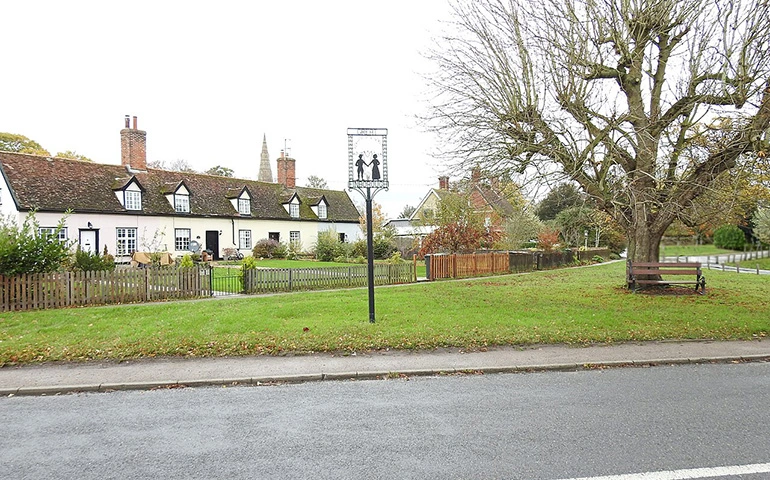
Visitor basics are straightforward. There are limited facilities within the village itself, so it makes sense to plan ahead and use nearby Stowmarket for shops or cafés. Parking is modest and respectful behaviour is expected, particularly around the church and residential lanes. As with much of rural Suffolk, this is a living community rather than a heritage site.
Great Finborough does not rely on headline attractions. Its significance is cumulative. A medieval church with a story attached to its spire. An estate influence that shaped its layout. An Easter Monday tradition that fills the lanes with mud and laughter. A well used footpath linking it to neighbouring Onehouse. Taken together, these elements explain why it remains a recognisable and valued part of Mid Suffolk life.

© 2026 Rum Owd Dew Made by WebDAC