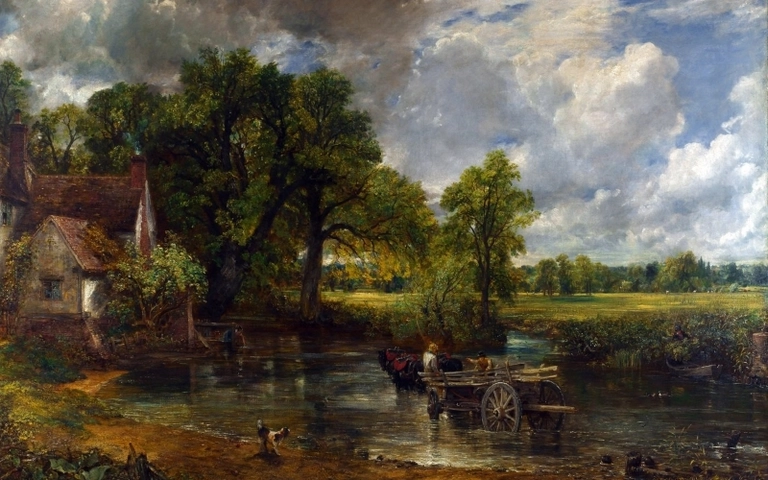
Dedham Vale is one of Suffolk’s most recognisable landscapes, not because of dramatic landmarks or grand estates, but because it has been observed, studied and recorded more carefully than almost any other rural area in England. It is widely known as Constable Country, a reference to the painter John Constable, who grew up in nearby East Bergholt and repeatedly returned to the River Stour and its surrounding fields for inspiration. The result is a landscape that many people feel they already know before they arrive.
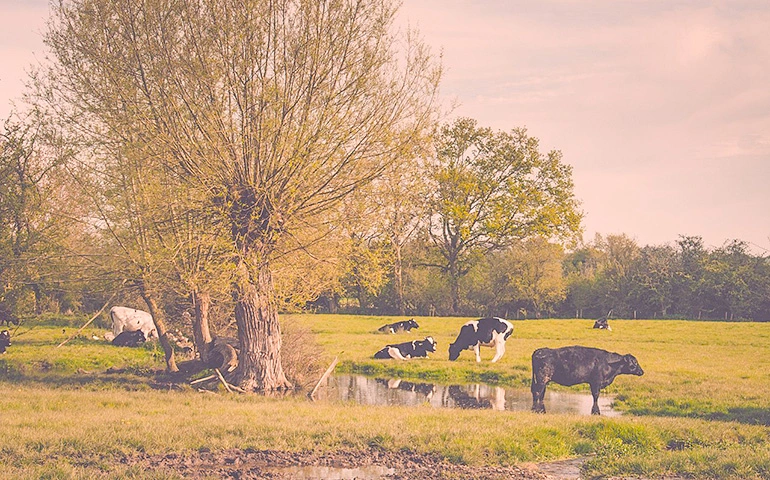
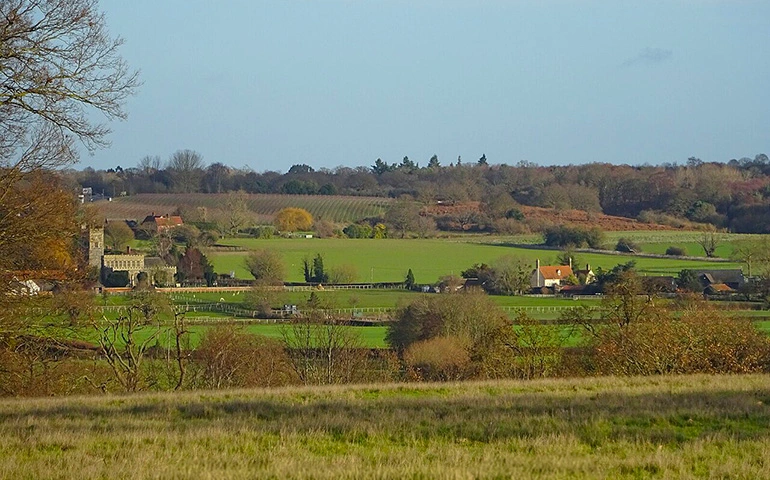
The vale follows the River Stour along the Suffolk and Essex border. It is designated as a National Landscape, formerly known as an Area of Outstanding Natural Beauty. What stands out is not scale but continuity. Meadows, hedgerows, flat grazing land and gently rising farmland create a working countryside that still resembles the scenes painted in the early nineteenth century.
The River Stour is central to the story of Dedham Vale. In the eighteenth and nineteenth centuries it was made navigable, allowing goods such as grain, bricks and timber to move between inland mills and the coast. Flat-bottomed barges travelled through a series of locks that can still be traced today. While commercial traffic has long since ended, the river remains active through leisure boating, canoeing and organised rowing events.
Watermills once lined stretches of the Stour. Flatford Mill, now owned by the National Trust, was operated by the Constable family. Its red brick buildings and adjacent Willy Lott’s Cottage appear in several of John Constable’s paintings. The agricultural base of the vale shaped local settlements. Villages such as Dedham, East Bergholt and Stratford St Mary developed around farming, milling and river trade rather than industry.
Dedham Vale matters locally because it represents a rare survival of lowland agricultural England that has avoided major urban expansion. Ipswich and Colchester lie within reach, yet the valley itself remains defined by farmland, parish churches and small roads rather than housing estates. Planning controls linked to its National Landscape status help maintain that character.
The villages within Dedham Vale are modest in size but well known. Dedham itself sits just over the border in Essex yet forms part of the same landscape. East Bergholt, in Suffolk, retains strong links to Constable. Its church tower, often referred to as a bell cage rather than a full tower, appears in several sketches. Flatford is not a village in the usual sense but a hamlet clustered around the mill buildings.
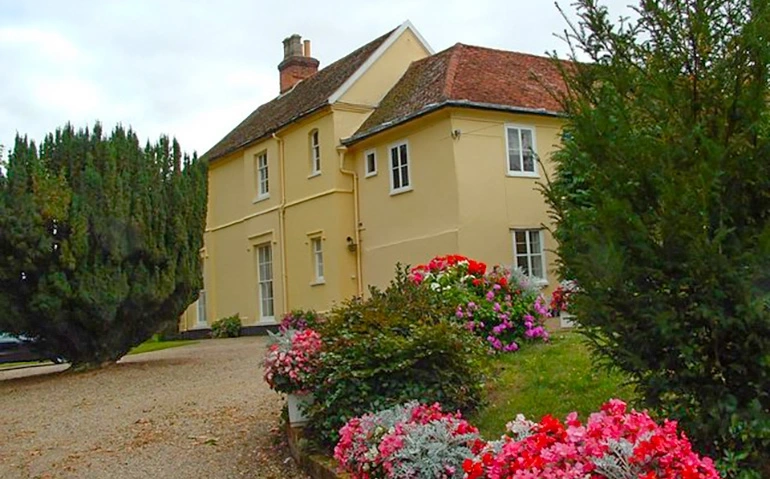
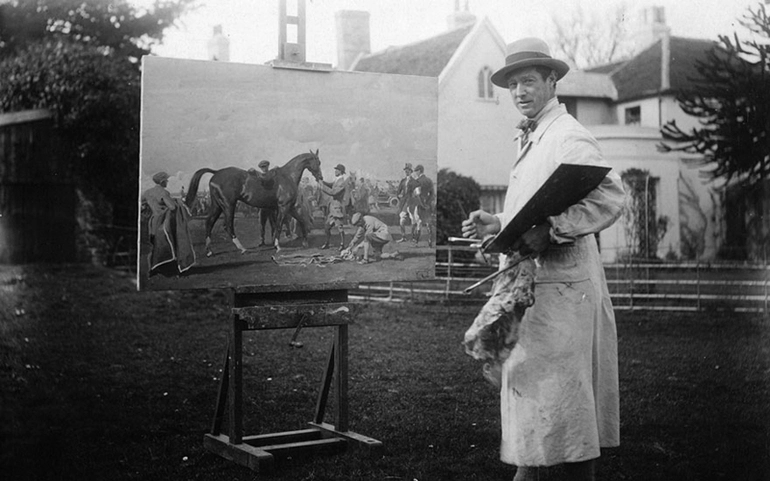
Another important cultural connection lies slightly north of the core river stretch. The Munnings Art Museum, housed in Castle House in Dedham, celebrates the work of Sir Alfred Munnings. Although best known for equestrian paintings, Munnings spent years working in and around the Stour Valley. His presence reinforces the area’s long association with British landscape and sporting art.
Lesser known facts include the extent to which the landscape has been managed rather than left untouched. Many of the hedgerows and pollarded willows that visitors photograph are the result of deliberate farming practices. The Stour Valley Path now runs for around sixty miles from the source in Cambridgeshire to the sea at Cattawade, giving walkers a structured way to experience the river corridor.
Visitor basics are straightforward. There is no single centre or ticketed entry point. Most people begin at Flatford, where car parking, tearooms and National Trust facilities provide an introduction. From there, footpaths lead along the river towards Dedham or back towards East Bergholt. Canoe hire is available at certain times of year, and rowing boats can often be seen near Flatford during summer.
Walking is the main activity. The terrain is generally level, though fields can be muddy in winter. Cycling is possible along quiet lanes but less practical on narrow footpaths. There are traditional pubs in Dedham and Stratford St Mary, and smaller cafés near Flatford, though options remain limited compared with coastal Suffolk.
The appeal of Dedham Vale lies in recognition. Visitors often comment that the scenes look familiar, and that is because they have been reproduced in galleries, textbooks and calendars for over two centuries. Unlike some heritage sites, there is no attempt to reconstruct the past. Farming continues. Livestock graze in front of views that have barely shifted since they were painted. The balance between preservation and everyday use is what gives the area its quiet strength.
Constable Country is not a marketing slogan added later. It reflects an artistic record that fixed this stretch of the River Stour into national memory. Dedham Vale remains significant not because it has changed dramatically, but because it has not.

© 2026 Rum Owd Dew Made by WebDAC