
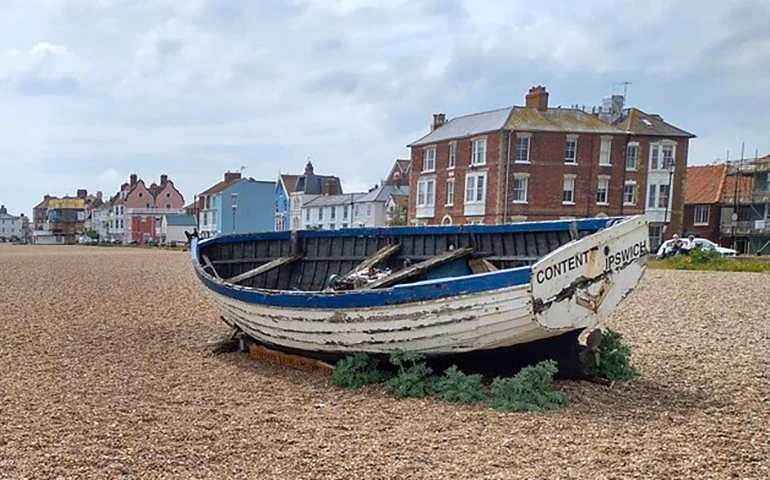
Aldeburgh is one of those Suffolk towns that manages to feel both traditional and quietly special at the same time. It is small, walkable and unpretentious, yet it carries a cultural reputation that stretches far beyond the county. You can buy world class fish and chips, sit on the shingle watching fishing boats being hauled in, and then spend the afternoon exploring serious music heritage. That mix is what makes it memorable.
The beach is shingle rather than sand, and the North Sea is rarely calm for long. Colourful boats are pulled up onto the stones, and fresh fish is still sold locally. It does not feel staged. Aldeburgh remains a working coastal town first, with everything else built around that foundation.
Aldeburgh’s history goes back to the medieval period, when it was an important port and fishing centre. Over time, coastal erosion and shifting shingle changed the harbour and reduced its commercial importance, but the town adapted. Fishing remained central, and the settlement continued to develop along the narrow strip between sea and marsh.
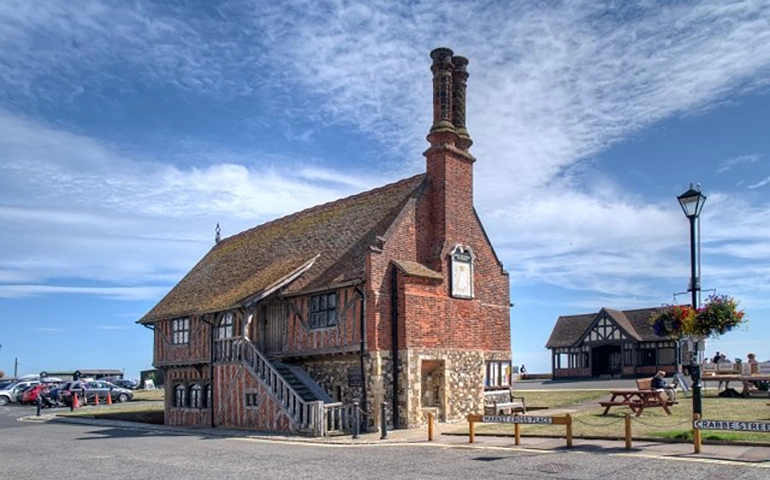
The Moot Hall is one of the town’s most recognisable historic buildings. Dating from the sixteenth century, it has served as a meeting place and civic centre for centuries. Today it houses the Aldeburgh Museum and stands only a short distance from the sea wall. Its survival in such an exposed position says a lot about the town’s resilience.
Just outside the centre, the Red House was the home of composer Benjamin Britten and tenor Peter Pears. From here Britten helped establish the Aldeburgh Festival in 1948. What began as a local music event grew into an internationally respected festival. The Red House is now open to visitors, with exhibitions and archive material that show how important Aldeburgh became in the world of classical music.
Aldeburgh’s cultural life does not feel forced. The festival remains a major annual event, drawing performers and audiences from around the world. Snape Maltings, a short drive away, is closely linked to the festival and provides a large concert hall in converted industrial buildings.
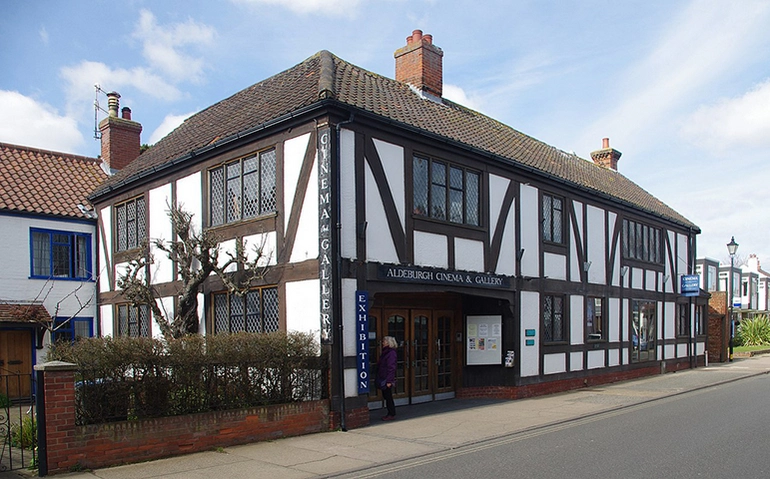
In the town itself, Aldeburgh Cinema is another point of pride. It is one of the oldest continuously operating cinemas in the country and still runs as an independent venue. Its survival reflects strong local support and a community that values shared experiences.
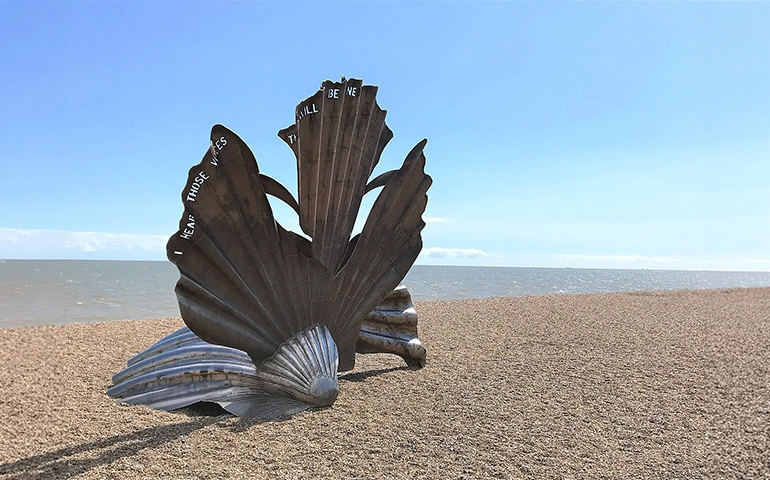
The Scallop, a large steel sculpture on the beach north of the town, is perhaps Aldeburgh’s most debated landmark. Created by Suffolk born artist Maggi Hambling as a tribute to Britten, it features a line from his opera Peter Grimes. Some visitors love it, others do not. Either way, it has become part of the town’s identity and a regular stopping point for walkers heading along the coast.
Ask most people what they associate with Aldeburgh and fish and chips will be high on the list. The town is known nationally for the quality of its fish. Queues often form along the high street, especially in summer. The routine is simple. Order your portion, carry it to the beach, and eat it looking out to sea. It is hard to improve on that.
Tea rooms and small cafés add to the appeal. You are not dealing with large chains but independent businesses that suit the scale of the town. There are galleries and bookshops too, reflecting Aldeburgh’s long standing link with the arts.
Beyond the obvious attractions, there are details that reward a slower visit. The Martello Tower at Slaughden marks part of the old coastal defences. The River Alde curves quietly behind the shingle ridge, offering a calmer landscape compared with the open sea. Walking south towards the marshes gives a different perspective on the town and its setting.
Aldeburgh is compact and easy to explore on foot. Parking can be busy during summer weekends and festival periods, so arriving early helps. The beach is entirely shingle, which is worth remembering if you are used to sandy resorts. The sea can be cold even in warm weather.
Most visitors combine a walk along the seafront with time in the town centre. The Moot Hall, the independent cinema, and the short drive to the Red House provide enough to fill a day without rushing. Add fish and chips by the sea and you have a straightforward but satisfying itinerary.
Aldeburgh works because it does not overcomplicate things. It offers good food, strong cultural history, distinctive landmarks and a real connection to the Suffolk coast. You leave with a sense that you have experienced something genuine rather than manufactured. That alone is reason enough to go.

© 2026 Rum Owd Dew Made by WebDAC